Most nonprofits treat their donor list as their whole asset. It isn't. Every person who shows up to your walk, ride, or gala knows dozens of people you've never emailed, and they'll vouch for you in a way no appeal can.
That's the entire premise of peer-to-peer fundraising, and it's why P2P is the strongest donor acquisition channel most nonprofits have access to.
According to Nonprofit Pro, roughly 80% of donors coming to a nonprofit through a peer-to-peer campaign are new. Several other studies show similar results: P2P brings in people who have never given to you before.
Finding the right peer-to-peer fundraising platform is how you actually reach them.
There's a catch worth knowing before you choose a platform. Only 0.4% of donors acquired through a peer-to-peer fundraiser ever convert to recurring giving, and P2P donors retain at below-average rates.
A platform that acquires donors and then loses them isn't solving your problem, which is why what a platform does after the campaign matters as much as what it does during.
We will walk you through why a dedicated peer-to-peer fundraising platform matters and a full comparison, so your next event starts with the right foundation.
14 Best Peer-to-Peer Fundraising Platforms at a Glance
Here's a quick comparison of the best peer-to-peer fundraising platforms before the full breakdown below:
How we evaluated these platforms: Every platform below was assessed on similar parameters, using each vendor's own published pricing and product documentation as of August 2026. Where a vendor doesn't publish pricing, we've said so rather than estimating.
What Is Peer-to-Peer Fundraising?
Peer-to-peer fundraising is a model where individual supporters create their own fundraising pages tied to your campaign, then ask their own network to give.
Instead of your team asking a thousand people once, a hundred supporters each ask ten people they actually know. Your community becomes your outreach team.
Why Do You Need a Peer-to-Peer Fundraising Platform?
A P2P fundraising platform turns an idea into something you can run by bringing together individual pages, tracking, and payment processing.
Here's what a dedicated platform gives you that a generic donation form can't.
Donor Pool Expansion
Every participant's page reaches people your nonprofit has never emailed. That's how online fundraising platforms built for P2P extend your reach past your existing list.
Diverse Donation Collection
Some participants prefer a one-time gift, while others want to set up a small recurring pledge for the cause. A good platform supports both without extra setup on your end.
Fundraising and Data Tracking
Leaderboards, participant performance, and campaign totals update in real time. You see which participants need a nudge and which teams are already ahead, without pulling a manual report.
Donor Records That Survive the Campaign
P2P brings in a wave of first-time donors who, on current benchmarks, mostly don't come back. Those changes may depend on whether their details land somewhere you'll actually use, like your CRM, your email list, or next year's invite list, or sit in an export nobody opens.
Detailed Comparison of the Top 14 Peer-to-Peer Fundraising Platforms
Here's the strongest feature, core capabilities, pricing, and trade-offs for each platform.
1. Pledge It
Capterra Rating: 4.9
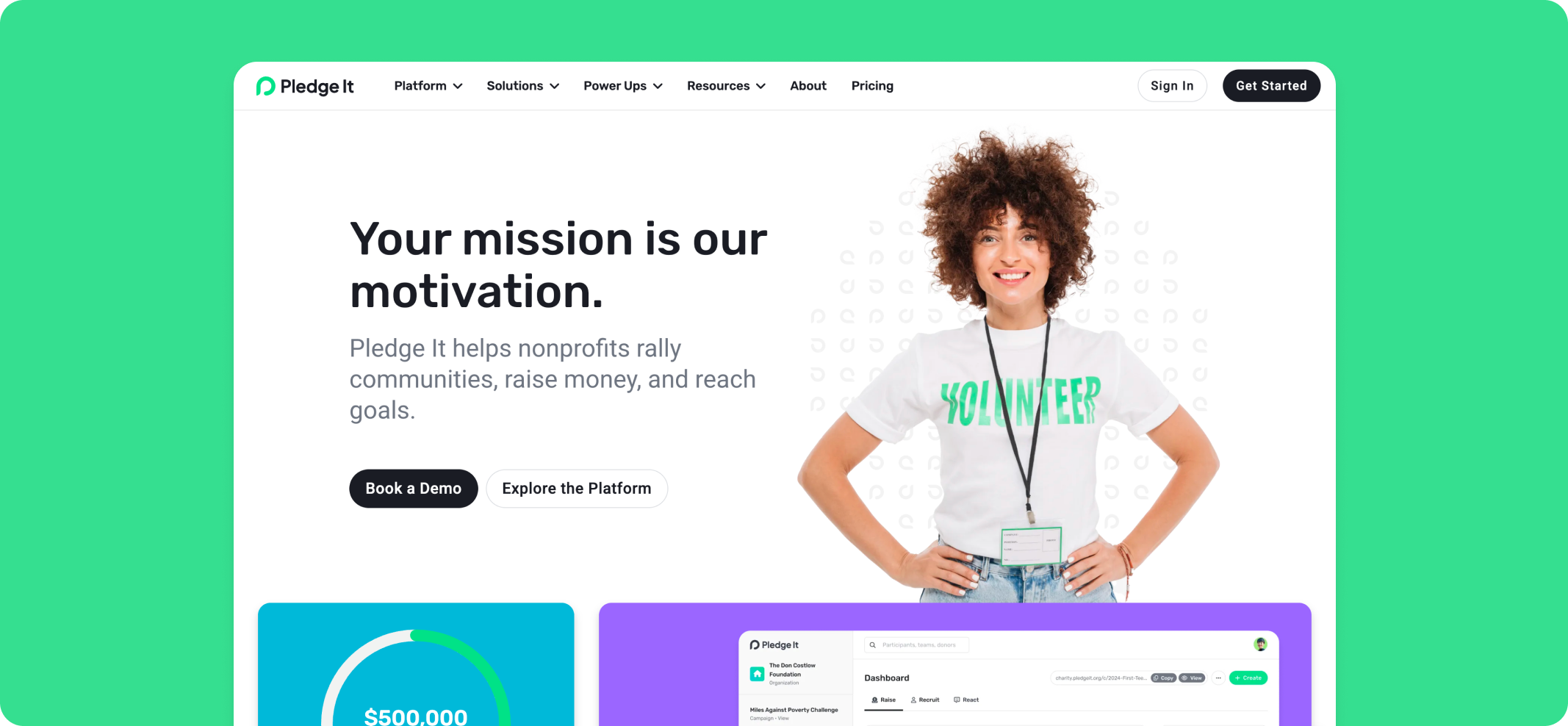
Pledge It is built for US nonprofits running events like walks, rides, tournaments, and a-thons, the campaigns that live or die on whether individual participants actually fundraise. More than 2,000 nonprofits run their events on it.
Best Feature
Every participant gets their own fundraising page automatically when they register, tied directly to the main event campaign and leaderboard.
Key Capabilities of Pledge It
- Individual and team fundraising pages created at registration
- Live leaderboards, plus custom group leaderboards by company, city, or relationship to the cause
- Pledge-per-unit fundraising, where donors pledge per mile, per hole, per burpee, or any metric you set
- Activity tracking and challenges, where participants log and share daily or weekly activity, with activity leaderboards
- Automated peer-to-peer recruiting, so the platform tracks past participants and re-invites those who haven't returned
- Milestones, achievements, and automated recognition for individual achievements
- Team dashboards for captains, plus a community wall for participant stories
- Automated donation requests sent by email from the dashboard
- Event ticketing and sponsorship tools in the same campaign
- Year-over-year analytics comparing participants, donors, and dollars raised
- Dedicated Customer Success Manager on annual and Enterprise plans
Pledge It Pricing
Note: Pledge It has options for donors to cover Stripe and platform fees so that most nonprofits take home over 98.5% of what they raise.
Unlimited campaigns and unlimited users on every plan, with no per-seat or per-feature charges, and the same rate whether the funds come from a participant page, a ticket, or a donation form.
Pros
- Participant pages built specifically for event-based P2P
- Registration, fundraising, and follow-up in one dashboard
- Dedicated success manager included in annual plans
- Subscription price published up front, with no per-user or per-feature charges
Cons
- Not built as a standalone donor CRM
- Built for US-based fundraising; No multi-currency or international campaigns
If your event depends on dozens or hundreds of participants fundraising at once, Pledge It's Customer Success Managers help set up your campaign structure before launch.
2. OneCause
Capterra Rating: 4.7
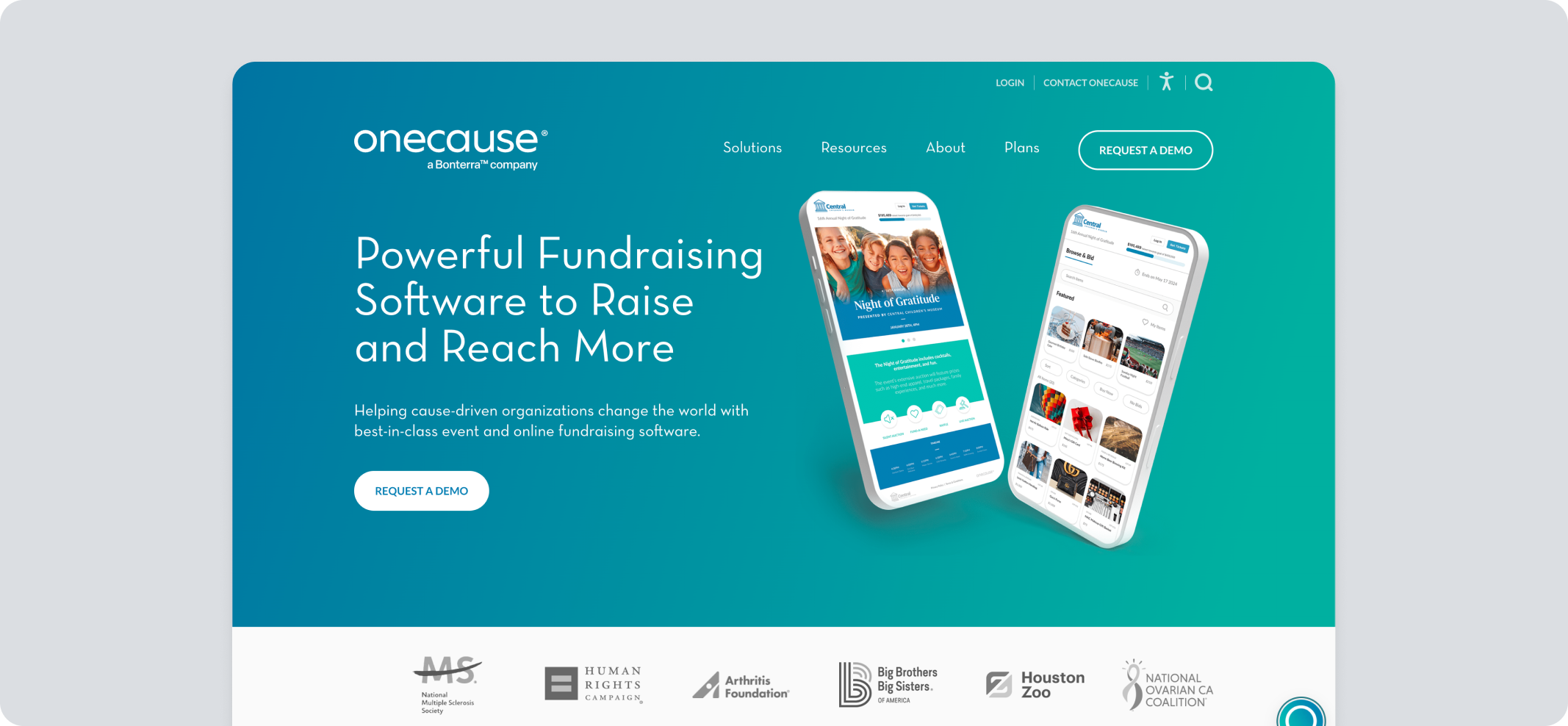
OneCause, acquired by Bonterra in October 2025, is an event fundraising suite built around galas and auctions, with peer-to-peer campaigns as one component.
Best Feature
Peer-to-peer campaigns that plug directly into OneCause's existing event ticketing and mobile bidding tools.
Key Capabilities
- Peer-to-peer and team fundraising pages
- Mobile bidding for auctions run alongside a P2P campaign
- Event ticketing and table management
Pricing
Limited information available on the site:
- Pay-As-You-Go starting at $200
- 5% pay-later fee applies to funds raised
- Professional Auction & Event package: $2,995 annually
- Custom pricing for most plans
Pros
- Strong fit if P2P runs alongside a larger gala or auction
- Extensive event-day support
Cons
- Pricing runs higher than several lighter P2P-only tools
- More platform than needed for a P2P campaign on its own
3. Fundraise Up
Capterra Rating: 4.8
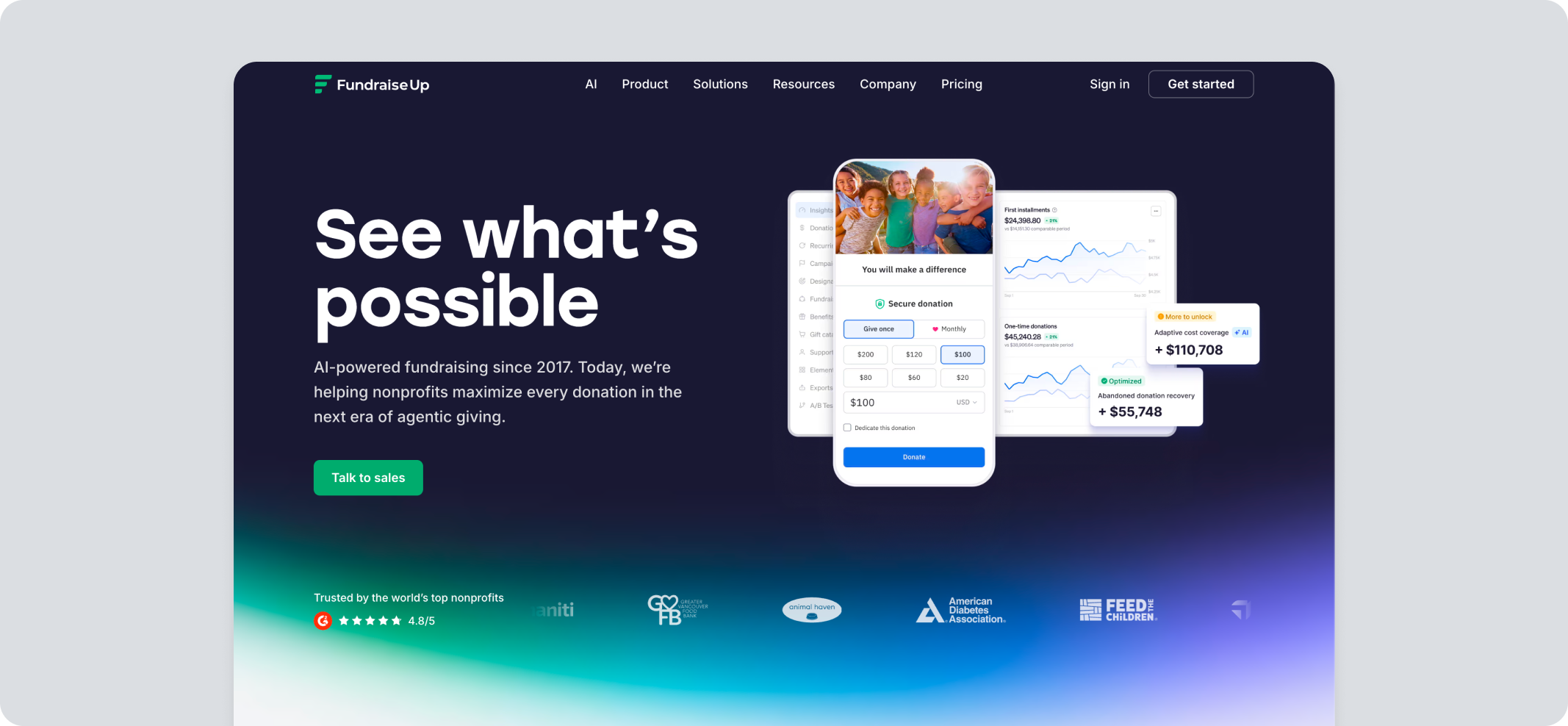
Fundraise Up focuses on checkout conversion, with peer-to-peer style campaign pages layered on top of its core optimized donation experience.
Best Feature
A conversion-optimized checkout that carries over to every participant's fundraising page, instead of just the main donation form.
Key Capabilities
- AI-optimized checkout and campaign pages
- Recurring giving prompts for participant donors
- Global payment methods and localization
Pricing
No monthly fee; 4% transaction fee (5% for crypto) + processing fee of 2.2% + $0.30 via Stripe, or 1.99% + $0.49 via PayPal at nonprofit rates
Pros
- Strong recurring-gift conversion tools
- Recurring upgrade prompts are its core product
Cons
- Peer-to-peer is secondary to its core donation-page focus
- Effective fee scales directly with donation volume
4. Donorbox
Capterra Rating: 4.8
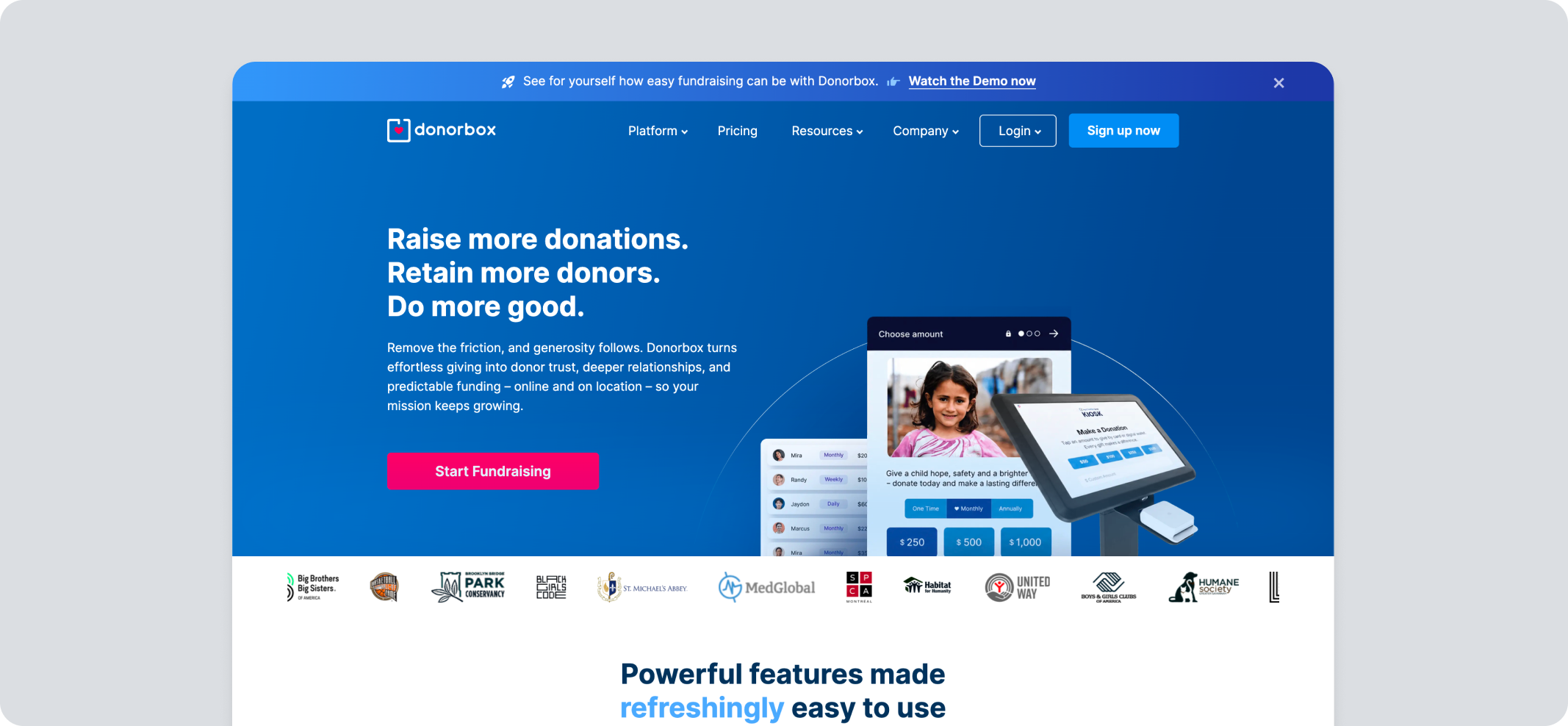
Donorbox offers peer-to-peer fundraising options with main focus on recurring giving. The platform also has donation forms and a campaign builder.
Best Feature
A donation form and P2P page that embeds cleanly into almost any nonprofit website with very little setup time.
Key Capabilities
- Peer-to-peer fundraising on Standard, Pro, and Premium plans
- Recurring giving with flexible intervals
- Event ticketing and memberships
Pricing
Pros
- Easy to use with different features available
- Large existing user base
Cons
- Charges can really add up for smaller nonprofits
- Many integrations carry their own monthly charge
5. Handbid
Capterra Rating: 4.7
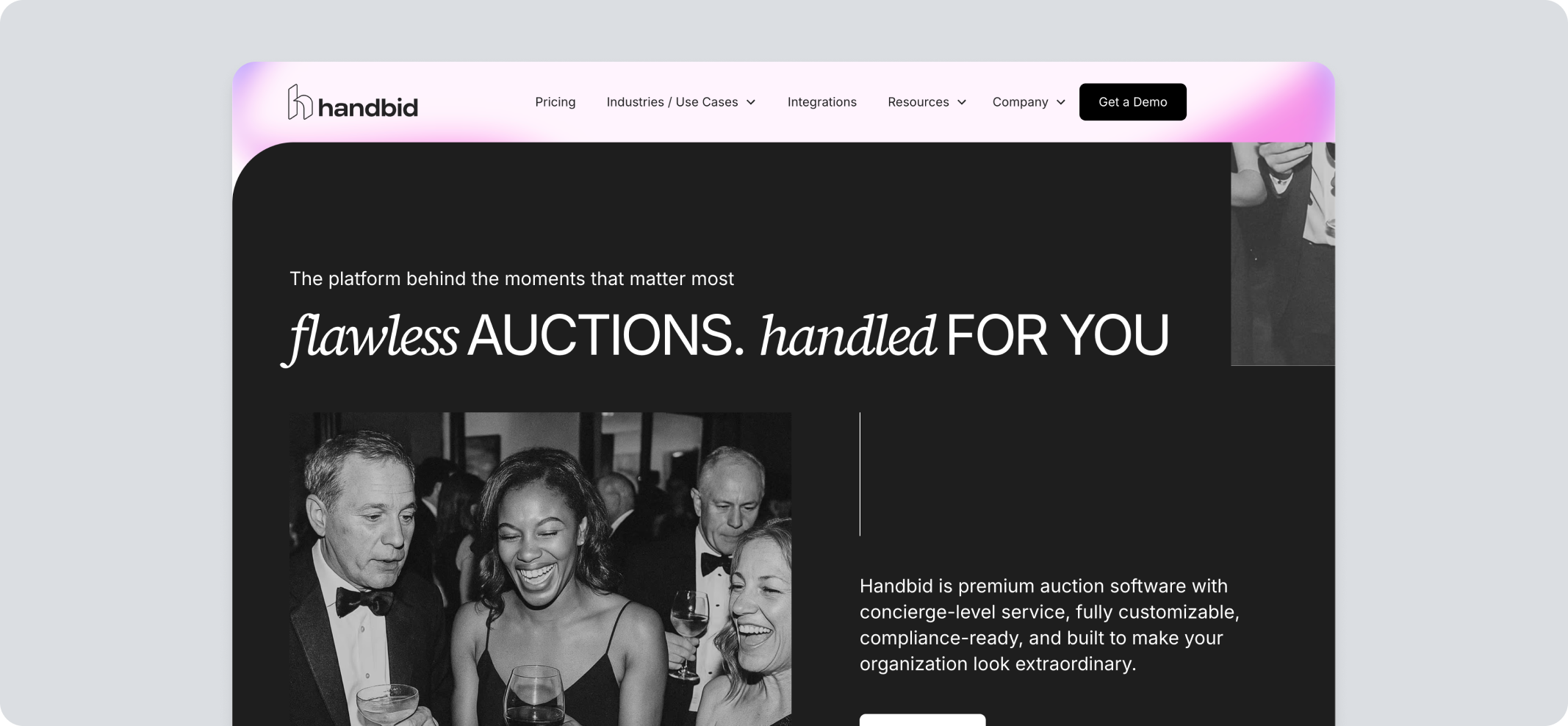
Handbid is a mobile-bidding auction platform with a peer-to-peer add-on, best suited to nonprofits running an auction alongside their campaign.
Best Feature
Native mobile bidding apps for auction night, with peer-to-peer pages available as a companion feature.
Key Capabilities
- Mobile-first bidding via native iOS/Android app
- Silent and live auction management
- Mobile access to P2P pages
Pricing
Pricing requires a consultation. Packages are structured around events, with single- and multi-event options, so costs scale based on the number of events an organization runs.
Pros
- Strong native mobile bidding experience
- Useful if your event pairs P2P with an auction
Cons
- Priced per event, which adds up across a full calendar
- The entry package covers a single auction or P2P event per year, so multi-campaign programs need a higher tier
- Built around auction night, so P2P is a companion rather than the core product
6. Blackbaud
Capterra Rating: 4.2
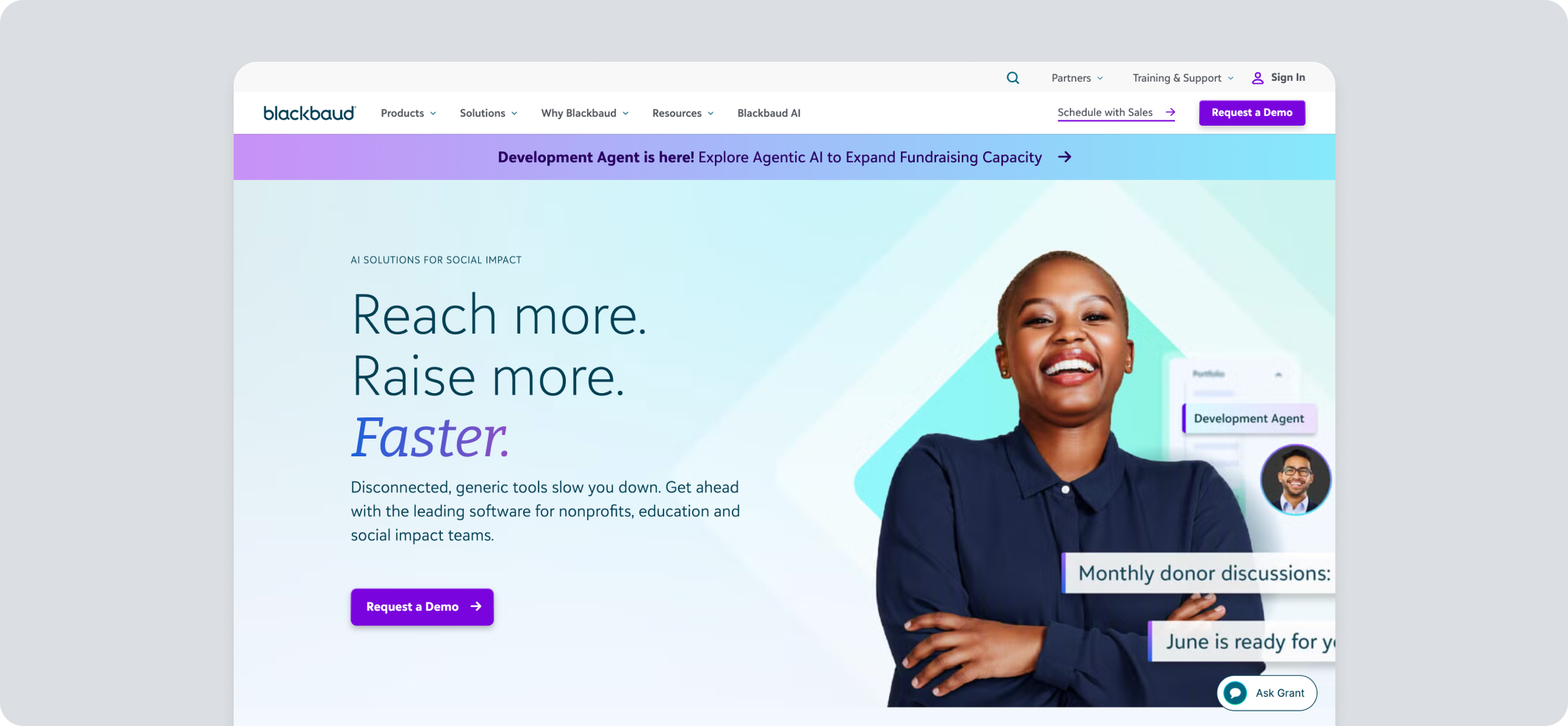
Blackbaud delivers peer-to-peer fundraising through TeamRaiser, its long-established event-based P2P platform, and JustGiving, its social and crowdfunding platform. Both integrate with Raiser's Edge NXT, Blackbaud's CRM, rather than being part of it.
Best Feature
Deep CRM integration that ties peer-to-peer campaign data directly into a full donor history and reporting system.
Key Capabilities
- TeamRaiser for participant-led, event-based P2P programs, including activity tracking and a mobile participant center
- JustGiving for social fundraising and crowdfunding, with native Raiser's Edge NXT and eTapestry integrations
- Advanced reporting, analytics, and AI-powered donor insights
Pricing
Pricing not available publicly.
Pros
- Deep CRM and reporting depth for large development teams
- Long track record with major institutions
Cons
- Expensive and complex for small to mid-size nonprofits
- Requires dedicated staff or consultants to manage well
- Peer-to-peer is a separate purchase from the CRM, so the true cost is the sum of several products
7. GiveSmart
Capterra Rating: 4.5
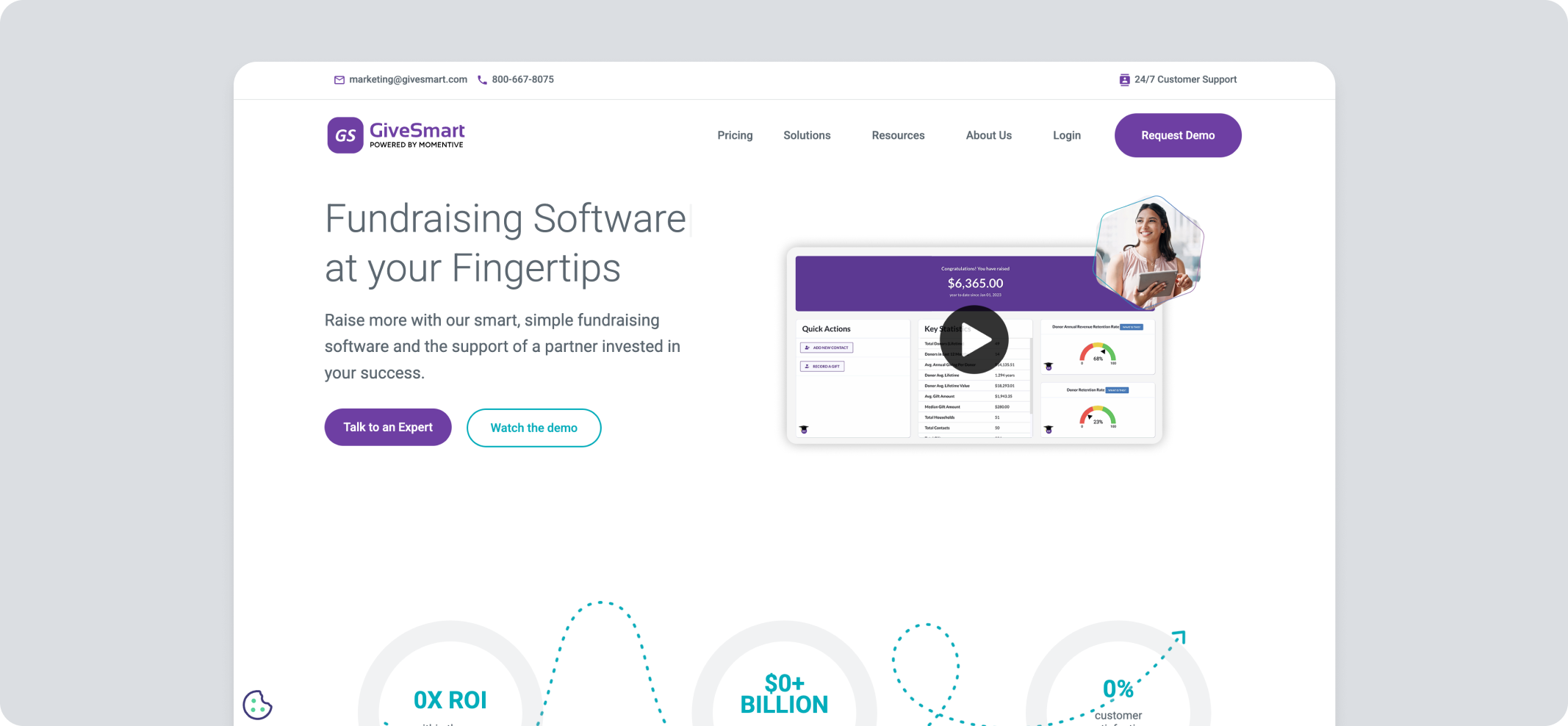
GiveSmart bundles peer-to-peer fundraising with event ticketing, auctions, and text-to-give into one fundraising suite.
Best Feature
A full suite of fundraising tools available under one subscription instead of separate add-ons for each format.
Key Capabilities
- Peer-to-peer campaign pages
- Event ticketing and mobile auctions
- Text-to-give outreach
Pricing
Pros
- Broad feature set under one subscription
- Established track record across schools and nonprofits
Cons
- Positioned above lighter P2P-only tools, so budget comparison requires a sales conversation
- Reported costs run higher than several lighter P2P tools
8. Engaging Networks
Capterra Rating: 4.4
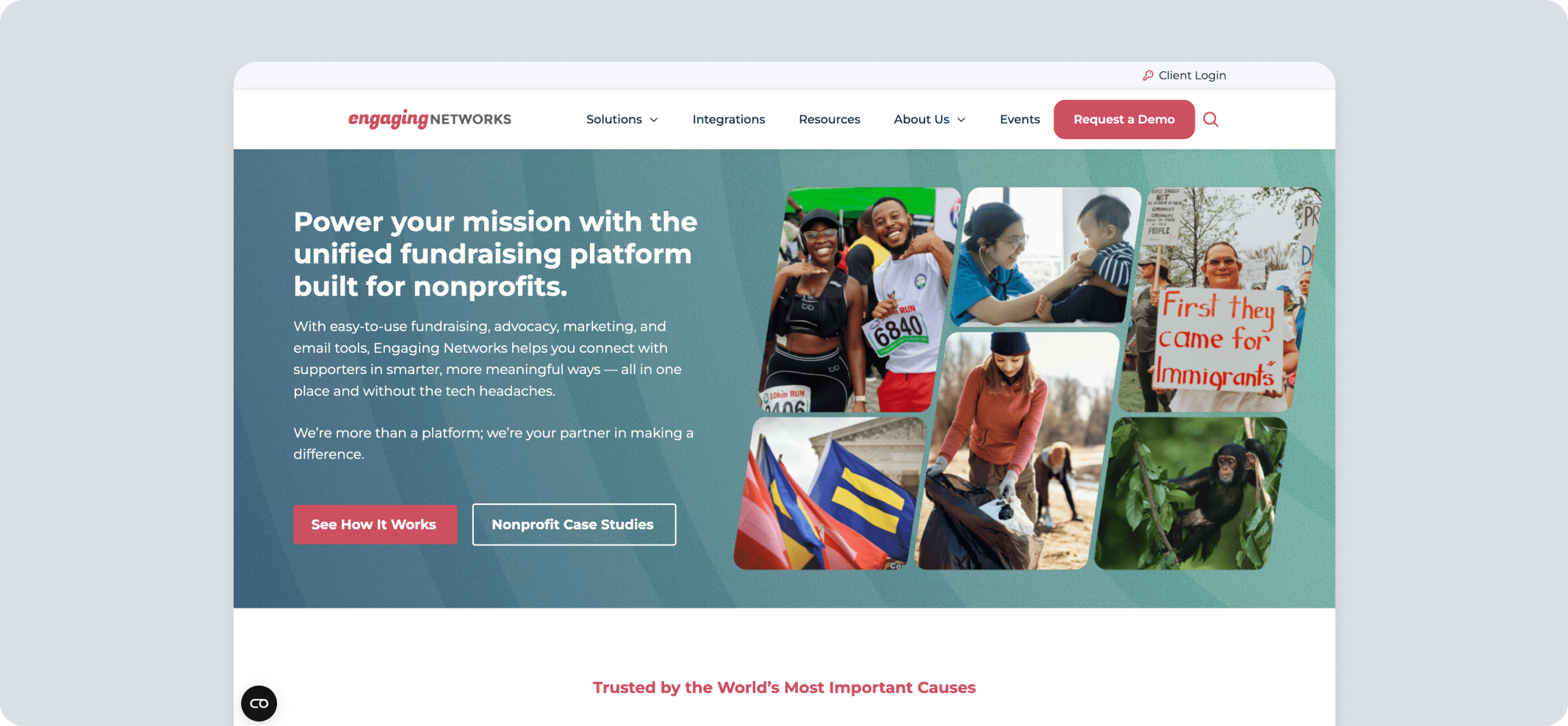
Engaging Networks is a digital engagement platform that combines peer-to-peer fundraising with advocacy, email, and donation tools, aimed at established nonprofits.
Best Feature
Deep customization across fundraising, advocacy, and email in a single connected system rather than separate tools.
Key Capabilities
- Peer-to-peer fundraising pages
- Advocacy and email marketing built into the same platform
- Two-way CRM sync with Salesforce, Raiser's Edge, and others
Pricing
Pricing not available publicly.
Pros
- Highly flexible and customizable for complex campaigns
- Strong CRM integrations for larger organizations
Cons
- Built for organizations running advocacy alongside fundraising
- More offerings and heavier packages than a small nonprofit typically needs
9. Zeffy
Capterra Rating: 4.8
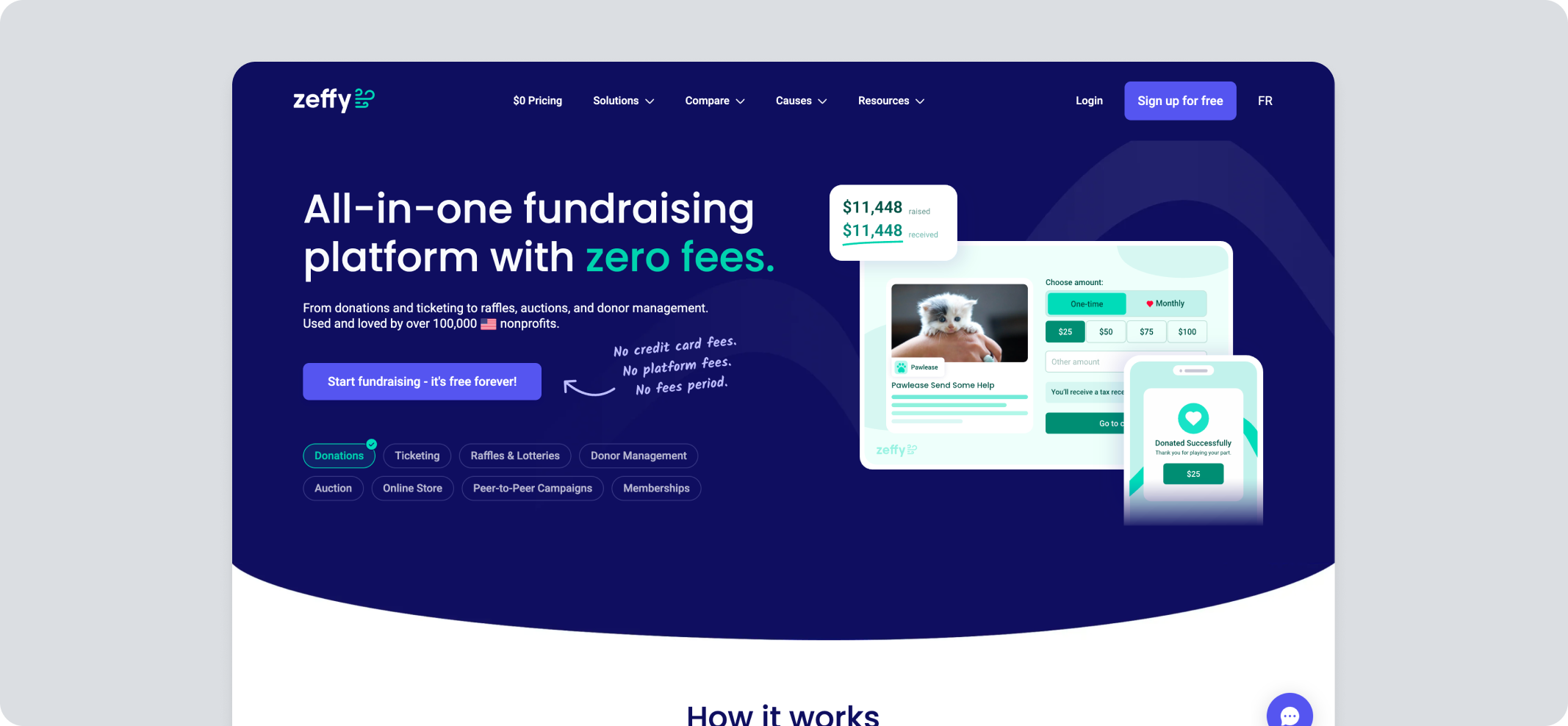
Zeffy is one of the few peer-to-peer fundraising platforms that covers all costs through optional donor contributions.
Best Feature
Genuinely zero platform and processing fees on peer-to-peer campaigns, funded entirely by voluntary donor contributions.
Key Capabilities
- Peer-to-peer campaign pages
- Donation forms, ticketing, and memberships
Pricing
Free via donor tipping
Pros
- Free for nonprofits
- Integrations available
Cons
- Fundraising depends on donors opting into the voluntary contribution
- Less depth than event-first platforms for complex, multi-stream event fundraising
- Checkout can be unintuitive
10. Givebutter
Capterra Rating: 4.8
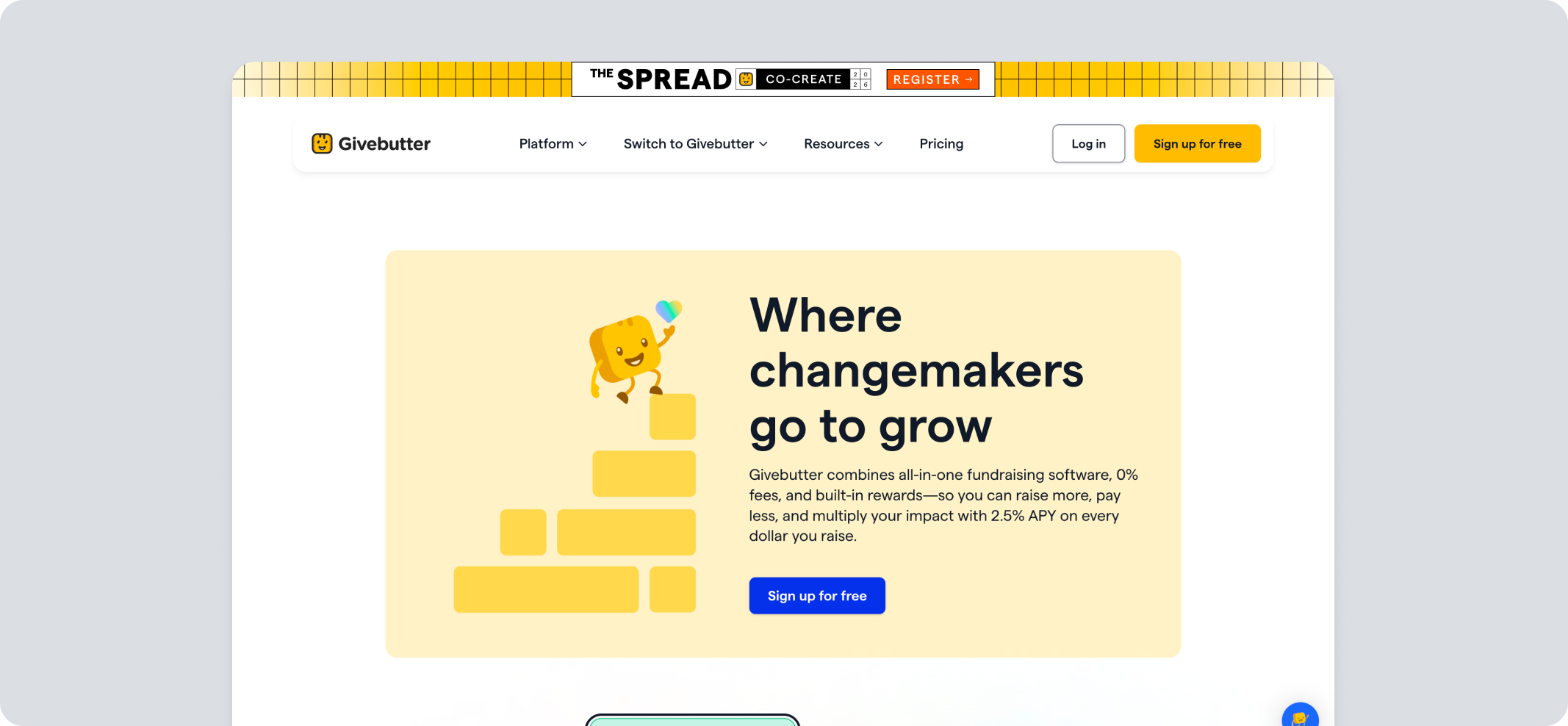
Givebutter bundles peer-to-peer campaigns, event ticketing, and a light CRM, funded by optional tips donors leave at checkout.
Best Feature
A full peer-to-peer feature set available at no cost when donor tips are enabled.
Key Capabilities
- Peer-to-peer campaigns with team leaderboards
- Built-in light CRM with unlimited contacts on the free plan
- Text and email campaign tools
Pricing
Pros
- Free with donor tipping option
- Unlimited users and contacts on the free tier
Cons
- Fundraising model depends on donors accepting the tip prompt
- Enterprise pricing isn't published
- Plus pricing is based on total contacts, so a large P2P campaign can become expensive fast
11. DonorDrive
Capterra Rating: 4.2
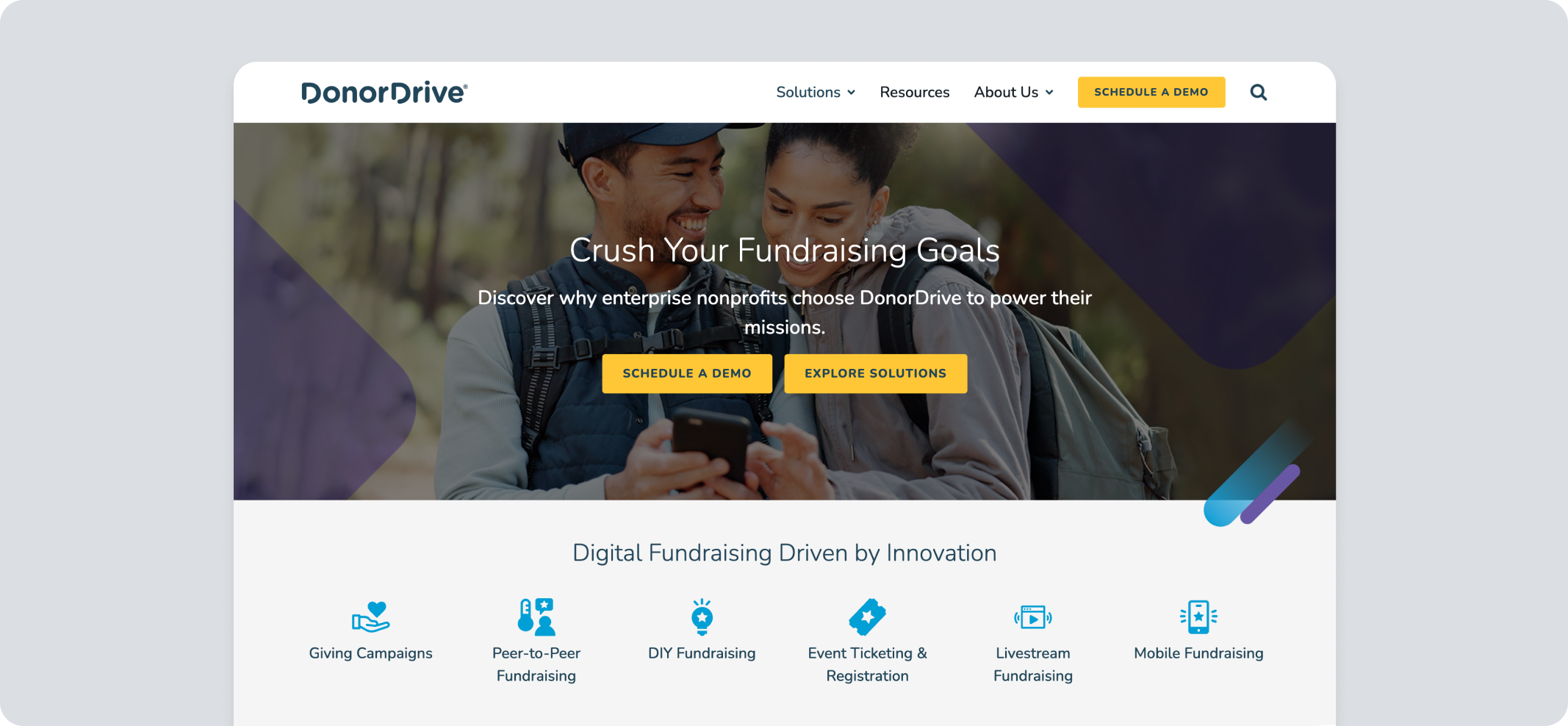
DonorDrive is an enterprise peer-to-peer fundraising platform built for large-scale programs and major national endurance events.
Best Feature
Built-in fundraising coaching tools that have helped major P2P programs post above-average year-over-year fundraising growth.
Key Capabilities
- Personalized peer-to-peer fundraising pages
- Built-in fundraising coaching and milestones
- Donation incentives and gamification
Pricing
Pricing not available publicly.
Pros
- Proven at large-scale, national P2P program level
- Strong participant coaching and milestone tools
Cons
- Pricing isn't published, geared toward larger budgets
- More infrastructure than a small nonprofit typically needs
12. Almabase
Capterra Rating: 4.7
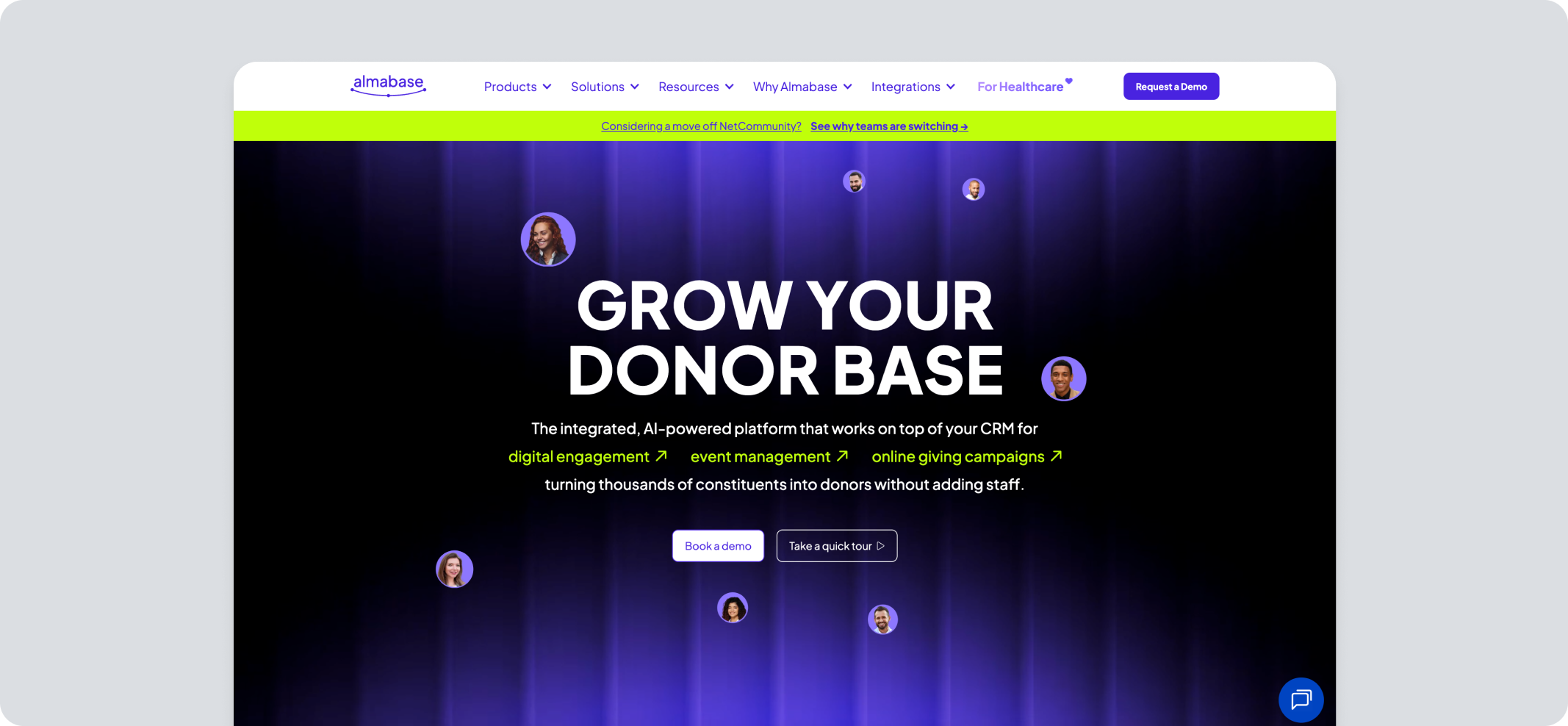
Almabase supports peer-to-peer and crowdfunding campaigns for schools and universities managing alumni communities alongside fundraising.
Best Feature
Alumni directory and community tools built around long-term relationship tracking, with peer-to-peer campaigns layered on top.
Key Capabilities
- Peer-to-peer and crowdfunding campaigns
- Alumni directory and community platform
- Event registration for reunions and alumni events
Pricing
Pricing not available publicly.
Pros
- Purpose-built for alumni and advancement teams
- Combines community building with fundraising
Cons
- Niche fit outside education-focused organizations
- Pricing isn't published
13. GoFundMe Pro
Capterra Rating: 4.3
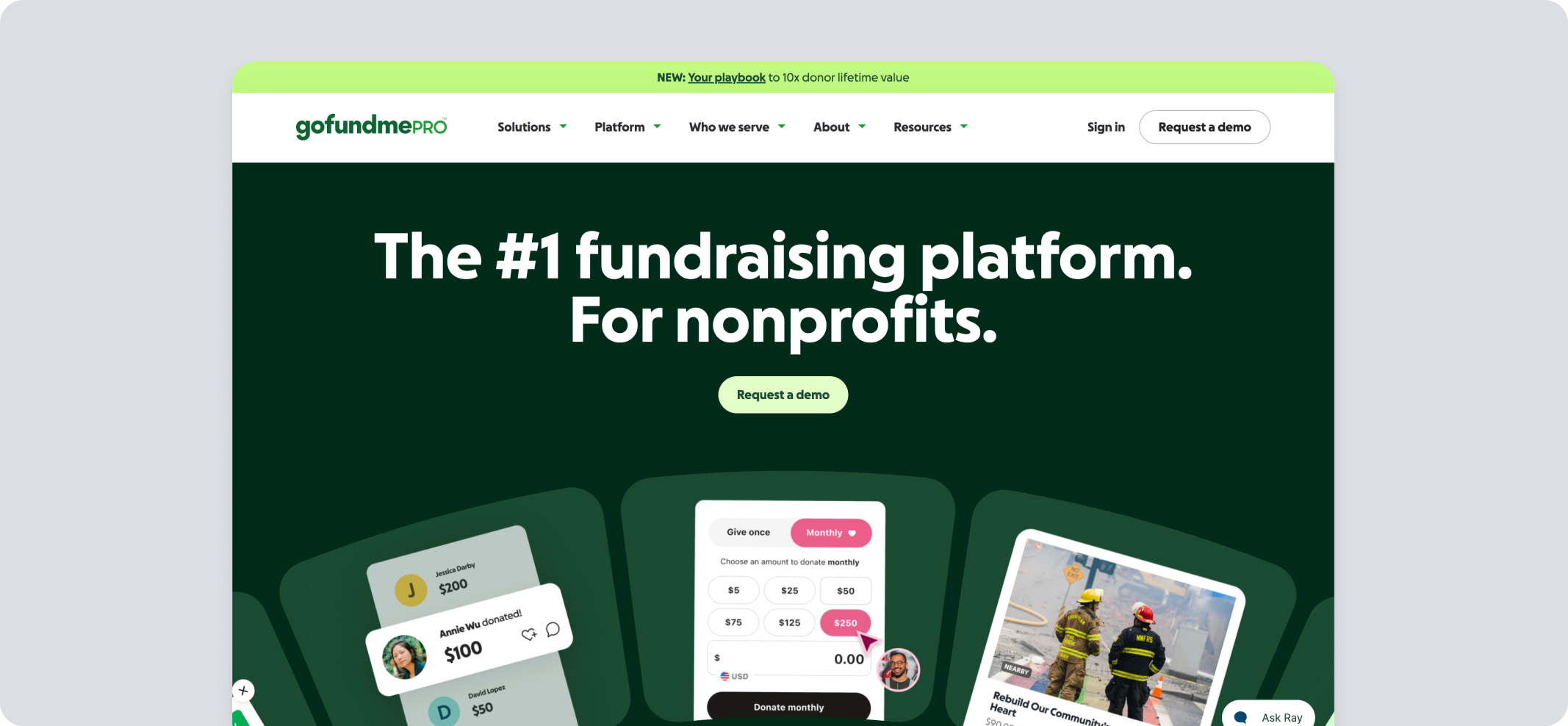
GoFundMe Pro (formerly Classy) is a well-recognized peer-to-peer fundraising platform, backed by the reach of the GoFundMe brand.
Best Feature
Instant brand recognition that can lower donor hesitation at checkout, since most donors already know and trust GoFundMe.
Key Capabilities
- Peer-to-peer and event fundraising campaigns
- Donation pages with broad brand reach
- Salesforce and Blackbaud integrations
Pricing
Pricing not available publicly.
Pros
- Widely recognized consumer brand
- Strong integrations for larger nonprofits
Cons
- Subscription pricing isn't published, so budget comparison requires a sales conversation
- Standard pages can feel like they compete with personal campaigns
- Consumer GoFundMe and GoFundMe Pro are different products; make sure you're comparing the right one
14. Bloomerang
Capterra Rating: 4.7
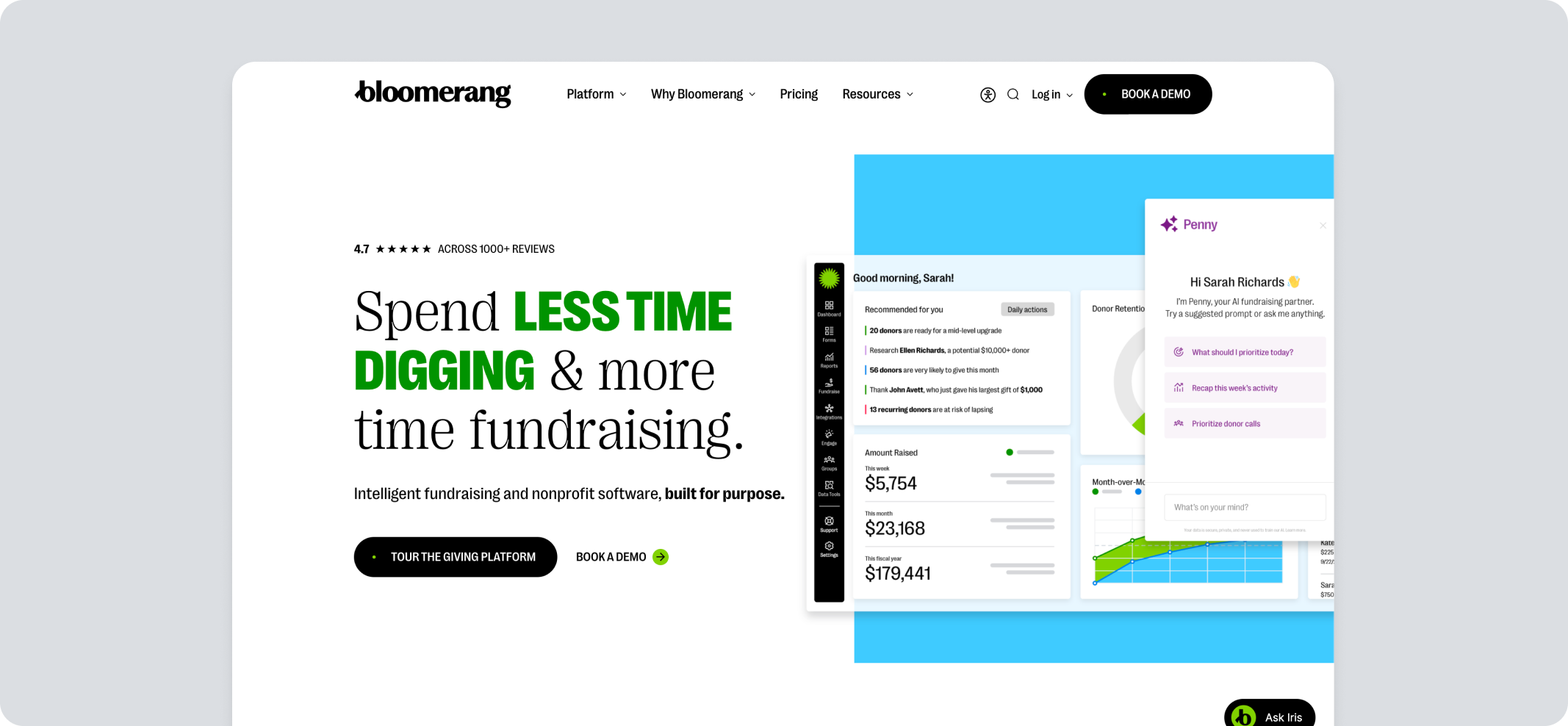
Bloomerang is peer-to-peer fundraising software layered onto its core donor retention CRM, with the fundraising module available as an add-on.
Best Feature
Engagement scoring that ties peer-to-peer donor activity back into a full retention and stewardship picture.
Key Capabilities
- Peer-to-peer fundraising via the add-on fundraising module
- Donor CRM with unlimited users
- Data hygiene tools like deceased-donor suppression
Pricing
Processing combines Bloomerang's charge and the merchant fee into one rate: 3.95% + $0.30 per transaction, rising to 4.95% + $0.30 for peer-to-peer. eCheck is 1.95% + $0.95, or 2.95% + $0.95 for P2P. American Express adds 1%.
Pros
- Unlimited users on every plan
- Strong retention and engagement reporting once P2P donors convert
Cons
- Peer-to-peer requires bundling with the core CRM
- Pricing climbs as your contact count grows
- Peer-to-peer requires bundling with the core CRM
Feeling motivated to run your very own P2P fundraiser? Go through our list of ideas.
8 Key Features to Look for in Peer-to-Peer Fundraising Platforms
Choosing peer-to-peer fundraising software gets easier once you know what matters day-to-day. Across the best platforms for peer-to-peer fundraising, these are the features worth checking before you commit.
1. Quality Support
Peer-to-peer campaigns run on a tight timeline, and a slow support ticket during launch week costs you momentum. Look for a team that answers quickly, instead of just a knowledge base.
Pledge It brings quality support and customer success managers to your campaign.
2. Participant Page Setup Speed
If building a personal fundraising page takes twenty minutes, some registrants simply won't finish.
The best platforms automatically create the page upon registration and allow the participant to personalize it later. Ask any vendor to show you the flow from registration to a live, shareable page, and time it.
3. Diverse Integrations
Your P2P platform should connect to your CRM and email tools without manual exports. Otherwise, donor data quietly piles up in a system nobody checks.
4. Participant Coaching and Automated Nudges
Most participants have never fundraised before. Look for automated sequences that prompt someone who hasn't personalized their page, hasn't sent a first ask, or has stalled short of goal. This is the single biggest lever on average-raised-per-participant, and it's where platforms differ most.
5. Fundraising Minimums and Commitment Capture
If your event carries a minimum, which is common in endurance programs, check whether the platform can collect a payment method at signup and charge the shortfall. Without it, minimums are an honor system.
6. Team Structures and Captain Tools
Teams consistently outraise individuals, but only if captains can see who's active. Check for team pages, captain dashboards, and team-level leaderboards.
7. Detailed Progress Tracking
When you organize a fundraising event, you need to see which participants are behind before your event, not after. Real-time leaderboards and page-level data let you nudge the right people at the right time.
8. Offline and Cash Donation Entry
Participants collect cash and checks. If the platform can't record those against a participant's page, your leaderboards are wrong and your best fundraisers look worse than they are.
Success Story

How RMHC Exceeded Goals With Pledge It's Peer-to-Peer Fundraising
Ronald McDonald House Charities of Oregon & SW Washington runs its peer-to-peer fundraising through the annual Eugene Marathon. They use the campaign to help fund a "home away from home" for families of chronically ill children.
Its previous platform was unintuitive and time-consuming, with poor experiences for staff and fundraisers alike, and it couldn't handle individual and team fundraising flexibly. That meant less time connecting with supporters and telling the organization's story.
After moving to Pledge It’s complete event fundraising platform, campaign pages, automated emails, flexible fundraising options, and a "copy and update" feature that reuses past campaigns took the administrative load off the team.
The results held up through a difficult year that included the loss of a major sponsor. RMHC of Oregon exceeded its 2025 goal by 6%, increased participant turnout, and saw each fundraiser raise an average of $538, against an industry benchmark of $391. As Development Director Jessica Ubel put it, “it's been the best platform I’ve used for peer-to-peer fundraising by far.”
Which Peer-to-Peer Fundraising Platform Should You Choose?
The right platform depends on the nature of your event. A national endurance program has different needs than a single community walk, and the best peer-to-peer fundraising platform fits naturally with every cause you work with.
Among the best peer-to-peer fundraising platforms, the winners are the ones that cater well to your organization’s particular needs.
For nonprofits building a fundraising calendar around events, Pledge It (the peer-to-peer fundraising platform) gives each participant a fundraising page as soon as they register. You even get a dedicated Customer Success Manager who helps plan the campaign at every step.
Ready to start the best peer-to-peer fundraiser this season?