The air is turning cold, the holidays fill everyone's calendar, and donors are often especially ready to give. Finding the right ideas for fundraising for nonprofits is key to turning this seasonal warmth into real support for your cause.
The timing works in your favor. According to M+R Benchmarks, 37% of all online revenue is given in December alone, which makes winter the busiest stretch of the giving year.
This blog covers top winter fundraising ideas, sorted by use case, with a detailed look at each one's pros and cons, so you can pick the format that fits your organization this season.
Quick Look at the Best Winter Fundraising Ideas
Different situations call for different ideas, and the same idea can fit more than one. This table sorts every idea by the use case it serves best, whether you're organizing a fundraiser with a tight budget or a big list of ideas for winter:
Easiest-to-Run Winter Fundraising Ideas
These winter fundraising ideas work with minimal setup, a small team, and a low budget, which makes them a solid starting point if this is new territory.
Looking for the best fundraising platform to run these ideas? We’ve got you covered!
1. Hot Cocoa or Coffee Bar
Nothing draws a crowd on a freezing day like the smell of something warm brewing nearby. Set up a simple stand at any gathering and let guests make a donation for a steaming cup.
Suggest $2-$5 per cup and expect $200-600 at a well-attended event, with 2 weeks' lead time and 2 volunteers.
Pro Tip: Pair it with an existing event instead of running it alone to make it easier.
Pros
- Very low setup cost
- Works alongside almost any other event
- Easy for volunteers to run
Cons
- Revenue per cup is modest
- Needs a steady flow of foot traffic to add up

2. Holiday Gift Wrapping
Shoppers loaded down with bags don't want to wrestle with tape and paper once they get home.
Offer to wrap their purchases on the spot, and the donation jar fills up while the gifts come out picture-perfect. Suggest $3-$5 per gift and expect $300–$1,200 over a busy weekend of shifts, with 3–4 weeks' lead time and 4–6 volunteers across shifts.
Pro Tip: Set up near a busy retail spot and offer a suggested donation per gift.
Pros
- Minimal supplies needed
- Appeals to shoppers already in a giving mood
- Volunteers can rotate shifts easily
Cons
- Revenue depends heavily on foot traffic
- Requires securing a retail partnership
3. Candle and Ornament Baskets
A basket filled with candles and ornaments has broad appeal because it's small, giftable, and already dressed for the season. Supporters buy them as presents for others, so every sale doubles as someone else's holiday shopping done.
Price baskets at $15-$40 and expect $600-$2,000 in gross sales from 40-80 baskets, before sourcing costs, with 4-6 weeks' lead time and 3-5 volunteers.
Pro Tip: Bundle a few small items together so each basket feels like a complete gift.
Pros
- Low production cost per basket
- Doubles as a holiday gift for buyers
- Simple to sell online or in person
Cons
- Inventory management may take planning
- Margins depend on sourcing costs
4. Winter Photo Booth
Snow globes, string lights, and a few silly props turn any corner into a scene worth capturing. Guests pay to snap a photo, and the picture itself becomes free advertising once it lands on social media.
Suggest $5–$10 per photo and expect $300–$1,000 at an event with a few hundred guests, with 2–3 weeks' lead time and 2 volunteers.
Pro Tip: Add a simple seasonal backdrop and let the props do the marketing for you.
Pros
- Low cost with reusable props
- Naturally shareable on social media
- Works well alongside any winter event
Cons
- Needs a staffed table to run smoothly
- Revenue per photo tends to be small
5. Toy Donation Drive
Instead of asking for cash, this campaign sends supporters straight to the toy aisle. Every donated toy goes to a child in the community who might otherwise go without this holiday season.
Ask for one new toy in the $15–$25 range and expect 150–400 toys, roughly $2,000–$8,000 in retail value but no cash, with 4–6 weeks' lead time and 4–6 volunteers for collection and sorting.
Pro Tip: Set a clear, visible collection goal so donors can see progress build.
Pros
- Very low overhead to organize
- Strong emotional pull during the holidays
- Easy for supporters to participate without cash
Cons
- Requires storage and sorting logistics
- Doesn't directly generate cash revenue but good for new supporter acquisition
6. Holiday Crafts Workshop and Sale
This is part maker's session, part marketplace. Attendees sit down to handcraft, then watch a second batch of the same items get sold to raise funds.
An afternoon of glue and glitter becomes both a bonding experience and a revenue stream. Charge $15–$35 per workshop seat and $5–$40 per item sold, and expect $800–$3,000 between the two, with 4–6 weeks' lead time and 5–8 volunteers.
Pro Tip: Let attendees make one item to keep and one item to donate back for the sale.
Pros
- Low material cost with volunteer labor
- Doubles as a fun community gathering
- Crafts sell easily during the holidays
Cons
- Requires supply prep and setup time
- Attendance can vary week to week
7. Valentine's Day Handmade Gift Shop
When February rolls around, a table of handmade cards, treats, and trinkets gives Valentine's Day shoppers an easy place to find gifts. This pop-up rides the last big gift-giving push of winter before spring arrives.
With Super Bowl LXI falling on the same day as Valentine’s for the first time, this shop can be put in a Super Bowl event, as discussed later in this blog. Price items at $3–$25 and expect $500–$2,500 across a weekend pop-up, with 6–8 weeks' lead time (crafters need time to build stock) and 4–6 volunteers.
Pro Tip: Keep the price points low and varied so gifts fit any budget.
Pros
- Simple to organize with volunteer crafters
- Clear, dated occasion drives urgency
- Low cost per item produced
Cons
- Narrow selling window around the holiday
- Inventory that doesn't sell needs a backup plan
Running several small, low-cost ideas across one season means tracking a lot of small campaigns at once. Pledge It keeps every one of them, and their combined totals, visible on a single dashboard.
Outdoor and Active Winter Fundraising Ideas
Cold weather doesn't have to keep supporters indoors. Where it snows, these ideas can be a great outdoor fit. Where it doesn’t, the substitutes can be nature walks and treks for interested participants. These easy winter fundraisers take advantage of the winter instead of fighting against it:
8. Polar Plunge
Picture a crowd bundled in coats, cheering as brave participants sprint into freezing water for your cause. Each plunger collects pledges beforehand, so the shock of the cold becomes the whole point of the spectacle.
Set a $50–$125 fundraising minimum per plunger and expect $4,000–$15,000 from 40–100 plungers. Keep in mind 10–12 weeks' lead time and 12–20 volunteers for registration, warming tents, and safety support.
Pro Tip: Partner with a local safety team so the logistics feel secure for both organizers and plungers.
Pros
- High energy that's easy to promote
- Strong pledge-per-jump fundraising potential
- Memorable enough to become an annual tradition
Cons
- Requires safety staff and cold-water precautions
- Weather can complicate planning
9. Sleigh or Hay Rides
Bells jingling, blankets piled high, a slow ride through a lit-up neighborhood or snowy field, this is nostalgia sold by the ticket. It gives families a reason to linger and enjoy the evening together.
Charge $5–$15 per rider or $30–$50 per family and expect $1,000–$4,000 across one or two evenings, with 6–8 weeks' lead time and 6–8 volunteers.
Pro Tip: Time the rides around a lights display or holiday market for a natural pairing.
Pros
- Distinctive, seasonal draw
- Works well as a ticketed add-on to a bigger event
- Appeals across a wide age range
Cons
- Needs a vehicle and driver partnership
- Weather-dependent for outdoor routes
10. Winter Walk-a-Thon
Bundle up and hit a route, whether that's a neighborhood loop or an indoor track, while sponsors back every mile covered. It supports movement with a purpose, built for a crowd that wants to stay active even in the cold.
Charge a $0–$25 registration fee, then ask each walker to raise $50–$150 in pledges. Expect $3,000–$15,000 from 50–150 walkers, with 8–10 weeks' lead time and 10–15 volunteers.
Pro Tip: Offer a shorter indoor-track option for supporters who'd rather skip the cold.
Pros
- Accessible to most fitness levels
- Easy to layer in pledge-per-mile fundraising
- Can run in-person, virtual, or both
Cons
- Cold weather can reduce turnout
- Route planning takes real lead time
11. Skiing Event
For communities near the slopes, a day on the mountain becomes the fundraiser itself, with racers or casual riders gathering pledges tied to their runs.
The setting alone does a lot of the recruiting. Charge $75–$150 per skier, or set a pledge minimum, and expect $5,000–$15,000 with a resort sponsor on board, with 12–16 weeks' lead time and 8–12 volunteers.
Pro Tip: Confirm your resort partnership terms well before the season books up.
Pros
- Strong draw for winter sports communities
- Natural fit for a resort sponsorship
- High-energy, memorable experience
Cons
- Limited to areas with seasonal access
- Conditions can shift plans on short notice
12. Snow Shovel-a-Thon
Volunteers grab shovels and clear driveways and sidewalks across the neighborhood, turning a dreaded winter chore into an act of service worth sponsoring.
Homeowners get relief, and the cause gets a boost. Suggest $20–$50 per driveway and expect $500–$2,000 from 20–40 driveways, with 2–3 weeks' lead time (though the actual date depends on snowfall) and 8–15 volunteers.
Pro Tip: Pair the service with a sponsor match to double the impact of every driveway cleared.
Pros
- Combines service with fundraising
- Very low equipment cost
- Strong community goodwill
Cons
- Entirely dependent on snowfall timing
- Requires volunteer coordination and safety planning
13. Snowman Creation Fest
Teams or families race the clock to build the tallest, weirdest, silliest, or most elaborate snowman they can manage, then wait for judges to pick a winner.
It's playful, unpredictable, and entirely at the mercy of the weather. Charge $10–$25 per team and expect $300–$1,200 from 20–50 teams, with 3–4 weeks' lead time and 4–6 volunteers.
Pro Tip: Set simple categories, like tallest or most creative, to keep judging easy.
Pros
- Low cost with materials already provided by nature
- Fun, photogenic, and shareable
- Works for a wide range of ages
Cons
- Fully dependent on snowfall
- Limited fundraising ceiling on its own
Pledge-based events like a polar plunge or a walk-a-thon work best when every participant has their own page to share. Pledge It builds that automatically at registration.
Festive Holiday Winter Fundraising Ideas
The holiday season already has its own momentum. These are some of the best winter fundraisers for building a recognizable annual tradition:

14. Holiday Lights Tour
A curated route past the best-decorated homes or a dazzling park display gives guests something to look forward to on a cold night out.
Walk it, drive it, or ride it; the lights do the heavy lifting. Charge $20–$40 per vehicle for a drive-through or $10–$25 per person for a walk, and expect $2,500–$10,000 over several nights, with 8–12 weeks' lead time and 10–15 volunteers.
Pro Tip: Partner with homeowners or a local park early, since prime routes get booked fast.
Pros
- Strong, reliable seasonal draw
- Works well as a ticketed drive-through or walk
- Easy to make an annual tradition
Cons
- Route and permission logistics take real lead time
- Weather can affect a single night's turnout
15. Ugly Sweater Party
Guests show up in their loudest, tackiest holiday sweaters and compete for bragging rights, all while an entry fee supports the cause.
The sillier the sweater, the better the night tends to go. Charge $15–$35 per ticket and expect $1,500–$5,000 from 75–150 guests, with 4–6 weeks' lead time and 6–10 volunteers.
Pro Tip: Keep the entry fee low and let a sweater contest do the rest of the promotion.
Pros
- Low cost and easy to organize
- Naturally shareable on social media
- Broad appeal across age groups
Cons
- Revenue per attendee tends to be modest
- Needs a venue that can hold a crowd comfortably
16. Gingerbread House Contest
Bakers of every skill level roll out dough, pipe icing, and stack candy walls in hopes of building something judges can't ignore. What starts as a contest often ends as an auction, since everybody wants to share their masterpiece.
Charge $10–$25 per entry and $5–$10 per guest, then auction finished houses at $50–$200 each. Expect $1,500–$5,000 in total, with 6–8 weeks' lead time and 6–10 volunteers.
Pro Tip: Offer a few skill divisions so beginners don't feel outmatched by experienced bakers.
Pros
- Family-friendly and photogenic
- Doubles as a sellable auction item afterward
- Low ingredient cost per entry
Cons
- Judging logistics take some planning
- Entry fees alone rarely cover a big budget
17. Santa's Visit
Families line up for a classic photo-op with Santa himself, turning a childhood tradition into a steady stream of ticket and photo sales.
It's the kind of event people plan their December weekends around. Charge $15–$30 per photo package and expect $1,500–$5,000 over two or three weekend sessions, with 6–8 weeks' lead time and 4–6 volunteers per session.
Pro Tip: Book Santa and a photographer early, since December slots fill up fast.
Pros
- Strong draw for a wide community audience
- Photo sales add a second revenue stream
- Easy to pair with other holiday activities
Cons
- Costume, booking, and setup costs add up
- Limited to a narrow calendar window
18. Tree Decorating Contest
Local businesses, teams, or families each claim a tree and compete to make it the most eye-catching display in the room. Visitors vote with their eyes, and sometimes their wallets, for a favorite.
Charge $250–$1,000 per sponsored tree and $5 per public vote, and expect $3,000–$10,000 from 10–15 trees, with 8–10 weeks' lead time and 6–10 volunteers.
Pro Tip: Invite local businesses to sponsor a tree each for extra visibility and entry fees.
Pros
- Strong potential for repeat annual participation
- Sponsor-friendly format
- Visually appealing for social media
Cons
- Requires tree sourcing and display space
- Judging and logistics take coordination
19. Christmas Carol Concert
Local voices take the stage for an evening of familiar carols, filling a room with the kind of warmth only live music brings in December. Tickets or a simple donation appeal turn the applause into funding.
Charge $10–$25 per ticket, or $30–$50 per family, and expect $2,000–$8,000 from 150–300 attendees with a donation appeal at intermission, with 8–10 weeks' lead time and 8–12 volunteers.
Pro tip: Record the performance and offer it as a small thank-you gift to donors.
Pros
- Low production cost with volunteer singers
- Wide appeal across the community
- Easy to pair with a donation appeal
Cons
- Venue and rehearsal scheduling take lead time
- Revenue depends on ticket or donation turnout
20. Christmas Movies Marathon
Blankets, popcorn, and a lineup of holiday classics playing back-to-back give guests an excuse to settle in for the evening. It's built for anyone who'd rather stay cozy than brave the cold outside.
Charge $8–$15 per ticket, plus $3–$8 per guest in concessions, and expect $800–$3,000 from 75–200 guests, with 4–6 weeks' lead time and 4–6 volunteers.
Note that the screening of commercial movies, even if for charity, can require a license through Swank or MPLC. It can cost a hundred dollars or more per title, so check with your local guidelines before proceeding.
Pro Tip: Sell concessions separately from tickets to add a second revenue stream.
Pros
- Low-cost, cozy format
- Easy to run indoors regardless of weather
- Simple to organize with existing venue space
Cons
- Licensing may be required for public screenings
- Revenue ceiling is fairly modest on its own
Holiday-season events often overlap with GivingTuesday and year-end appeals. Pledge It keeps sponsor recognition, ticket sales, and donations connected, so nothing gets lost in the busiest stretch of your calendar.
Social and Celebratory Winter Fundraising Ideas
These ideas turn winter's natural gathering instinct into a fundraising night out. Several double as some of the best winter fundraisers for reaching sponsors and larger gifts:
21. Father-Daughter/Mother-Son Dance
Dressed-up pairs take to the dance floor for a night that's part prom, part family tradition, complete with photos to remember it by.
It's the kind of event families can mark on their calendars year after year. Charge $40–$75 per pair, plus $15–$25 per photo package, and expect $3,000–$8,000 from 100–150 pairs, with 10–12 weeks' lead time and 10–15 volunteers.
Pro Tip: Frame it as a night for family pairs or mentor pairs broadly, so more of your community can take part.
Pros
- Strong emotional draw for attendees
- Ticket and photo sales both add revenue
- Easy to make an annual tradition
Cons
- Venue and decor costs add up
- Attendance depends on advance promotion
22. Winter Gala
Formal wear, a plated dinner, and an evening built around major gifts make this gala event at its most polished. Silent auctions and sponsor recognition usually take center stage alongside the meal.
Tickets typically run $100–$250 each, with tables of 8–10 at $800–$5,000 or more. With sponsors and an auction, expect $25,000–$100,000 gross, with 24–40 weeks' lead time and 15–30 volunteers across the planning committee and event night.
Pro Tip: Pair the evening with a live or silent auction to significantly boost per-guest revenue.
Pros
- Highest revenue ceiling of any idea in this list
- Strong draw for major donors and sponsors
- Builds a signature annual event over time
Cons
- Requires the most planning lead time and budget
- Needs a dedicated team to execute well
A gala or ticketed evening usually means juggling seating, sponsorships, and an auction at once. Pledge It's event tools are built to run all three from the same dashboard.
23. Super Bowl Event
Big screens, tailgate snacks, and a room full of fans watching the same game turn a national event into a local fundraiser. Super Bowl LXI falls on Valentine’s Day in 2027, and well within the Presidents’ Day weekend. That is a first, and a great way for you to do more.
Charge $25–$75 for general admission and $100 or more for a premium package, and expect $3,000–$12,000 from 100–200 guests plus sponsors and raffles, with 8–10 weeks' lead time and 8–12 volunteers. Pair this idea with the Valentine’s gift shop and you can double the fun.
Pro Tip: Sell a mix of ticket tiers, from general admission to a premium watch-party package.
Pros
- Rides existing cultural momentum
- Strong sponsor and prize-donation potential
- High energy that's easy to promote
Cons
- Fixed date with no flexibility to reschedule
- Competes with private watch parties for attendance
24. New Year's Eve Party
Guests count down the final seconds of the year together, dancing their way from one calendar page to the next. Tiered tickets let the event scale from a modest gathering to a full-blown celebration.
Charge $60–$150 per ticket, with VIP tiers up to $250, and expect $6,000–$20,000 from 100–200 guests before venue costs, with 12–16 weeks' lead time and 10–15 volunteers.
Pro Tip: Offer an early countdown option for guests who won't stay until midnight.
Pros
- Built-in excitement around the calendar turn
- Ticket sales can be tiered easily
- Strong potential for a recurring tradition
Cons
- Competes with many other New Year's plans
- Venue costs run higher on a peak night
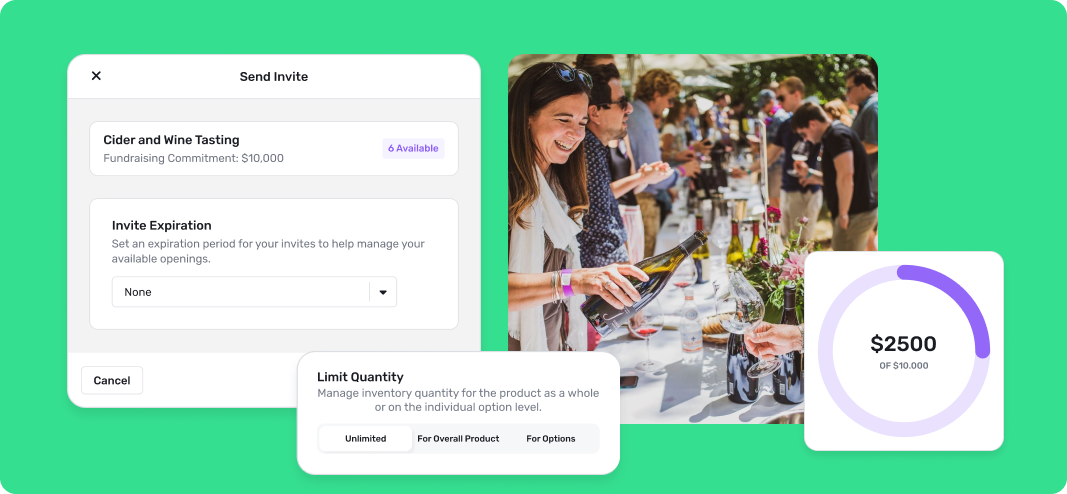
25. Cider and Wine Tasting
Local vendors pour their best offerings while guests sample their way through an evening built for slower conversation and refined tastes.
It leans into winter's quieter side instead of the season's louder holiday energy. Charge $40–$85 per ticket and expect $5,000–$15,000 from 75–150 guests plus sponsors, with 10–12 weeks' lead time (permits take time) and 8–10 volunteers, including licensed servers.
Pro Tip: Confirm your state and local rules on serving alcohol at a fundraiser well before the event, including any permits or licensed server requirements.
Pros
- Strong per-ticket revenue potential
- Natural fit for local vendor partnerships
- Appeals to a donor base that enjoys a refined evening
Cons
- Alcohol licensing and liability add real complexity
- Vendor coordination takes extra lead time
26. Cozy Breakfast Festival
Pancakes, coffee, and an early-morning crowd swap the usual dinner-event format for something lighter and more casual. It's a gentler way to gather a community without the cost of a full evening affair.
Charge $8–$15 per adult and $5 per child, and expect $1,500–$5,000 from 150–350 diners, with 4–6 weeks' lead time and 10–15 volunteers, most of them in the kitchen.
Pro Tip: Keep the menu simple so the kitchen team can serve a crowd without bottlenecks.
Pros
- Lower cost than a dinner event
- Appeals to an early-morning community crowd
- Easy to pair with a small silent auction
Cons
- Morning timing can limit attendance
- Kitchen logistics need careful planning
27. Soup Cook-Off
Local cooks and restaurants each bring their best pot to the table, and guests taste their way to picking a favorite. The friendly rivalry between entrants can be half the fun.
Charge $10–$20 per tasting ticket and $25–$50 per entrant, and expect $1,500–$5,000 from 100–250 tasters, with 6–8 weeks' lead time and 8–12 volunteers.
Pro Tip: Ask local restaurants to enter for extra visibility and a stronger turnout.
Pros
- Low ingredient cost per entry
- Strong community and local business draw
- Easy to pair with a bake sale table
Cons
- Requires food safety and serving logistics
- Revenue per attendee tends to be modest
Virtual and At-Home Winter Fundraising Ideas
Cold weather and busy holiday schedules make virtual winter fundraising ideas especially useful this time of year. These ideas travel well past your local guest list:
28. GivingTuesday Campaign
GivingTuesday falls on the Tuesday after Thanksgiving, December 1 in 2026, and opens the giving season with one focused day of online asks. Nonprofits set a goal, rally supporters around it, and drive gifts, matches, and shares inside a 24-hour window. Americans gave $4.0 billion on GivingTuesday in 2025, up 13% from the year before.
Pro Tip: Line up a matching gift before the day, then post progress toward it through the day so donors can see their gift count.
Pros
- Donors are already primed to give that day
- Donors tend to return for this
- Pairs easily with matching gifts and sponsor challenges
Cons
- Every nonprofit is asking on the same day, so attention is crowded
- The one-day window leaves little room to fix mistakes
29. Virtual Fitness Challenge
Supporters log miles, reps, or minutes from wherever they happen to be, turning personal workouts into a pledge-based campaign with no borders. Distance from the venue stops being an excuse not to join in.
Charge a $0–$25 registration fee and ask each participant to raise $50–$150, and expect $3,000–$12,000 from 50–150 participants. It needs 6–8 weeks' lead time and 2–4 volunteers for communications and support.
Pro Tip: Give every participant a personal page so their own network can sponsor their progress.
Pros
- No venue or weather dependency at all
- Reaches supporters well beyond your local area
- Performance-based pledges tend to raise more per person
Cons
- Needs strong promotion to build momentum without in-person energy
- Requires a platform that can track individual progress
Success Story

Case Study: How Pledge It Helped Uplifting Athletes’ Virtual Fitness Program
When Uplifting Athletes had to cancel its usual in-person Lift For Life events on college campuses, the team had days to replace an entire season.
Working with Pledge It's peer-to-peer platform, they built the "7,000 Mile Challenge". It was a fitness campaign where chapter leaders, supporters, and patients worked together toward covering 7,000 miles, one for every known rare disease.
"The 7,000 Mile Challenge was a monumental success in its inaugural year and an initiative that will be around long after the pandemic passes."
-Robert Long, Executive Director of Uplifting Athletes
Nearly twice as many participants became active fundraisers compared to a typical registration-fee event, and those fundraisers raised 2.5 times more per person.
Donors making performance-based pledges gave 12% more than the average online gift, with participants joining from the US, UK, Germany, Spain, and the Philippines.
30. Winter Gaming Stream
A streamer plays for a cause in front of a live online audience, watching donations roll in as viewers cheer them on in real time. It taps into a community that already gathers around a screen every night.
Suggest $5–$25 donations tied to milestone goals and expect $500–$3,000 per streamer, more with a team of streamers, with 3–4 weeks' lead time and 2–3 volunteers for moderation and tech.

Pro Tip: Set milestone goals during the stream to give donors a reason to keep giving as the total climbs.
Pros
- No venue cost at all
- Reaches a younger, online-first donor base
- Easy to run alongside a hashtag or social push
Cons
- Requires comfort with streaming platforms and setup
- Success depends heavily on the host's existing audience
31. Virtual New Year's Resolution Challenge
Participants pick a personal goal, whether it's fitness, a new habit, or something entirely their own, and fundraise while working toward it over several weeks. The resolution itself becomes the story donors get to follow.
Charge a $0–$25 registration fee and ask each participant to raise $50–$150. Expect $3,000–$10,000 from 40–100 participants over 4–6 weeks, with 4 weeks' lead time and 2–4 volunteers.
Pro Tip: Let participants pick their own goal, so the challenge feels personal.
Pros
- Ties naturally into a season people already reflect on
- No venue or weather dependency
- Works well as a multi-week campaign with regular check-ins
Cons
- Momentum can fade past the first few weeks
- Needs consistent communication to stay visible
Competitive A-Thon Winter Fundraising Ideas
Friendly competition adds energy to a winter campaign. These winter a-thon fundraising ideas turn a simple activity into a pledge-driven event:
32. Bowl-a-Thon
Teams take over the lanes for a night of friendly competition, raising pledges tied to games played or pins knocked down. It's a built-in social event that is approachable for first-time participants.
Charge $100–$300 per team lane fee, or $20–$35 per bowler, plus pledges. Expect $3,000–$10,000 from 8–20 teams, with 6–8 weeks' lead time and 6–10 volunteers.
Pro Tip: Book lanes early, since winter is a popular season for league play too.
Pros
- Fully indoor and weather-independent
- Easy team format that builds friendly competition
- Simple to book through a local bowling center
Cons
- Lane availability can limit event size
- Venue rental adds a fixed cost
33. Shoot-a-Thon
Whether it's basketball or another shooting-based activity, participants take their shots while pledges stack up behind every point scored. Fast-paced and easy to follow, it keeps spectators just as engaged as the players.
Charge $25–$50 per shooter and $1–$5 per point in pledges, and expect $3,000–$10,000 from 30–60 shooters plus sponsor-branded rounds, with 6–8 weeks' lead time and 8–10 volunteers.
Pro tip: Set a clear scoring method, like baskets made or targets hit, before the event starts.
Pros
- Simple scoring donors understand instantly
- Works well indoors during cold months
- Easy to pair with sponsor-branded rounds
Cons
- Needs a suitable indoor or covered venue
- Equipment and safety setup take planning
Success Story
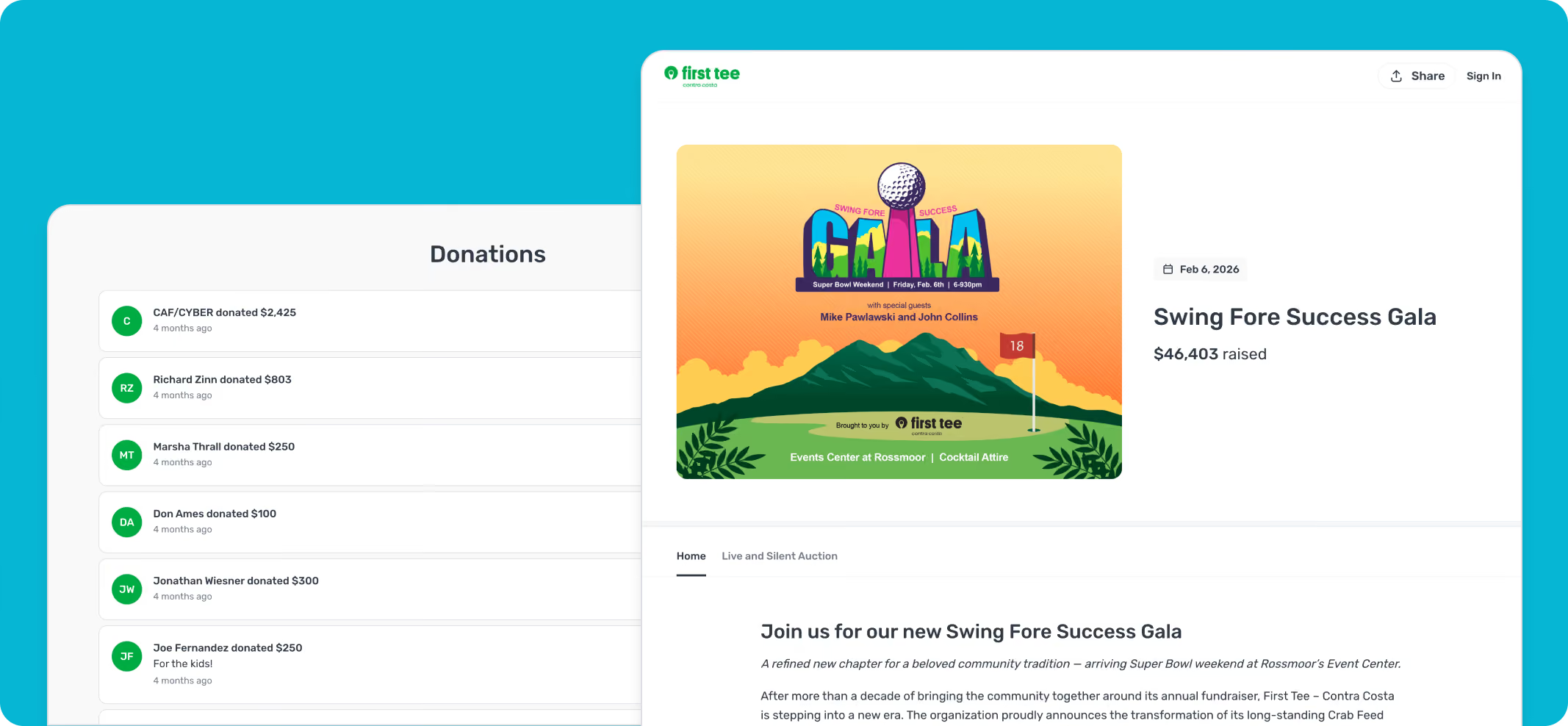
Case Study: How Pledge It Helped First Tee Contra Costa Grow Its Winter Gala by 220%
The setup: When Brandon Garcelon joined First Tee Contra Costa, the chapter's signature events were a golf tournament and a winter gala. Everything else ran on disconnected tools and a donor database.
The gap: Fundraising depended almost entirely on events. There was no individual giving program and no way to connect events, donors, and gifts. Brandon wanted one platform for events and donor data, without a stack of separate tools and fees.
The solution: The team moved to Pledge It (the complete event fundraising platform). It brought sponsorship management, event registration, and donor tracking into one system. For the first time, the winter gala, the golf tournament, and every donor record were connected. That view let the team turn one-time event guests into an annual giving strategy.
The result: Annual fundraising grew roughly 500% in under two years. Gala fundraising grew about 220%, and program enrollment nearly quadrupled, from 4,500 to 17,000 kids. A winter tradition that once ran on manual effort now anchors a strategy that keeps building year over year.
Run a Winter Fundraiser That Truly Warms Hearts
Several dozen ideas are a lot to choose from, but the right one usually comes down to your community and your calendar.
A supporter base that loves the outdoors leans toward a polar plunge or a walk. A quieter donor base might respond better to a virtual challenge or a cozy breakfast.
Ask your most loyal supporters which of last year's events they'd want to see again. Their answer tells you more about what will work than a planning meeting will.
Whichever winter fundraiser ideas you land on, Pledge It is a complete event fundraising platform that gives every event its own campaign page.
It is equipped with pledges, donations, and totals tracked in one place, backed by a dedicated Customer Success Manager to help plan the season.


