Running a fundraiser can feel like wearing every hat at once. You are guiding the mission, watching the funds, and rallying volunteers, often in the same week.
Then the doubts creep in.
Will enough people show up?
Will the room actually give?
What happens if the payment link fails halfway through the night?
Those worries are normal and solvable. The difference between a stressful event and a great one is a plan you can follow and trust.
That is what this guide gives you. Follow it at your own pace, and you will know how to organize a fundraiser event that raises funds and brings your community closer.
You do not need an events background or a big staff to pull this off. You just need a clear direction and the will to start.
Why fundraiser planning makes or breaks your event
A fundraiser is won or lost in the weeks before the doors open, and these are the reasons planning pays off.
- Planning protects your funds. Fees, deposits, and last-minute costs reduce your margin, so mapping them early keeps more of every dollar on your mission.
- Planning fills the room. A timeline tells you when invites, reminders, and ticket pushes go out, so you are not chasing guests the week of the event.
- Planning removes day-of panic. When roles, run-of-show, and the payment flow are set in advance, the night runs according to plan, and there is minimal chaos.
- Planning compounds each year. The budget and checklist you build now become the head start you reuse, so good fundraiser planning gets easier every time.
That is what learning how to organize a fundraiser event really buys you: a repeatable system, not a yearly scramble. These essential tips for first-time fundraisers turn that system into actionable steps you can take today.
Follow these 10 steps to organize a fundraising event
Each one builds on the last, so nothing feels out of sequence or rushed. Take them at your own pace, and by step 10, you will know exactly how to plan a fundraiser worth repeating.
Step 1: Set clear goals and success metrics
Give yourself a real number.
A clear target tells you how many tickets to sell, how many sponsors to call, and when you have hit your goal.
Use the SMART test to sharpen it:
Run your goal through it and watch it sharpen:
Weak: "Raise funds for the shelter."
Strong: "Raise $40,000 from 200 guests at our March gala."
Then track two or three signals as you go, not just the final total:
- Tickets sold by week
- Average gift size
- Sponsor dollars committed
- New donors added
These numbers warn you early, while there is still time to fix a slow week. That is at the heart of smart fundraising strategies for nonprofits: decide what winning looks like before you spend a dollar.
Write the goal at the top of your planning doc. Every choice that follows should point back to it.
Step 2: Build your event budget
Build your budget before you book anything.
The trick is to track two things separately: funds going out and funds coming in. Costs are what you spend to run the night. Income is what the night brings back.
Keeping them in separate columns serves an important purpose. It shows your net at a glance, not just your gross, so you always know what your mission keeps.
Start with a simple table that lists every cost and every income line side by side:
Subtract total costs from total income, and you have your projected net. That's the number your mission actually keeps.
Then add the two lines most teams forget:
- Contingency funds: Set aside 10% for the thing that breaks, runs out, or shows up late.
- Platform and processing fees: Ticketing and payment tools take a cut, typically 3-5%. Most donors cover this at checkout, so a donor-covers-fee setup keeps that $300 to $500 with your mission.
Step 3: Choose the right event type
The best event type is the one your specific crowd will show up for and give to.
Start with two questions: who is your audience, and what is your goal? Match the format to both.
Here are the formats most nonprofits run:
- Gala fundraiser: A formal, ticketed night for major donors, with tables, seating, and live donation moments
- Activity fundraisers: Walks, runs, and rides that draw a broad community and anchor most fall and spring seasons
- Golf tournament fundraiser: Ideal for corporate circles, earning through team entry fees and hole sponsors
- Raffles or 50/50: A simple add-on to any event that lifts revenue with low setup effort
- Silent auction fundraiser: Best when your network can donate goods, so guests browse and bid, often over dinner
Tools to layer up: Peer-to-peer pages, team leaderboards, merchandise, and sponsorship packages all bolt onto these formats to raise more.
Some giving works year-round. Crowdfunding and recurring giving keep funds flowing between events, so pair them with your wider campaign.
Many of the most successful nonprofit fundraisers combine two formats, like a gala with a silent auction, so guests mingle, bid, and give in one night.
Whatever you choose, make sure the format carries your mission.
Step 4: Assemble your planning team
Keep the core team small. Put one person's name next to each role, so everyone knows what they are signing up for.
Cover these roles before you go further:
- Event lead owns the plan, the timeline, and the final calls
- Budget owner tracks every cost, income line, and fee
- Sponsorship lead builds packages and works on the ask
- Marketing lead runs invites, email, social, and reminders
- Volunteer coordinator recruits and briefs the day-of crew
One person can wear two hats on a small team. The point is that each job has a clear owner, not that each owner does only one job.
Then layer in volunteers for the hands-on work: setup, check-in, and teardown. Reliable volunteers are the backbone of most fundraisers for nonprofits, so recruit early and brief them well.
Step 5: Create your event timeline
The best way to plan a timeline is backward. Start on event day and count back, so every deadline has room to breathe.
Here is a working countdown you can adjust to your event size:
- 3 to 5 months out: Lock the date and venue. Send save-the-dates so key guests hold the evening early.
- 2 to 3 months out: Open ticket sales and confirm sponsors. Line up catering, entertainment, and any permits.
- 6 to 8 weeks out: Send formal invitations. Start your email and social push, and brief your volunteers.
- 2 weeks out: Send reminders to anyone who has not bought a ticket. Confirm final headcount and run-of-show.
- Event week: Test the payment flow, print materials, and confirm every owner knows their role.
A written timeline is where organizing a fundraiser event stops feeling like chaos and starts feeling like a plan.
Step 6: Secure sponsors and in-kind donations
Sponsors turn a good event into a profitable one. They cover your costs up front, so more of every ticket reaches your mission.
Keep your offer simple. Three tiers sell better than seven, because choice overload stalls the decision.
Build your ladder like this:
In-kind donations count too:
- Venue space or catering
- Auction items and raffle prizes
- Printing, photography, or A/V
Step 7: Set up your event tech stack
Your tech stack is the plumbing of the night. Get it right, and funds move without friction.
So what should that software do? Cover four essentials before anything else:
- Ticketing and registration: Let guests sign up, purchase raffle tickets, buy shop items, and pay in one flow.
- Payments: Accept cards and digital wallets like Google Pay and Apple Pay, so no one is left out.
- Messaging: Communicate with participants and donors leading up to and during the event with important updates and information.
- Receipts: Send branded, tax-ready acknowledgments the moment a gift is made.
Pick tools that talk to each other. When ticketing, payments, and your messaging system live in separate apps, data goes missing and follow-up stalls.
An all-in-one event platform like Pledge It is the simplest answer to how to fundraise for organizations without stitching software together.
Step 8: Promote your event across channels
Promotion is how people find and join your event. Each channel does one job, so use them together rather than interchangeably.
- Email: Your workhorse for invites, updates, and the formal ask. Segment past donors from new contacts.
- SMS: Save it for reminders, last-call tickets, and day-of directions.
- Social: This is your reach engine. Post behind-the-scenes clips, sponsor shout-outs, and easy-to-share links.
- Calendar invites: Lock the date into every guest's phone the moment they register.
Build a simple content calendar so nothing goes quiet. Map one message per channel per week, then ramp up in the last two weeks.
Repeat your call to action every time. Tell people exactly what to do next: buy a ticket, sponsor a table, or share the page.
A steady, multi-channel push is how to plan a fundraiser that fills seats instead of relying solely on walk-ins.
Step 9: Execute on the event day
Event day runs best as three clear acts. Give each one an owner and a cue, so the night never stalls.
- Act 1: Doors open. Check-in should be fast and warm. Greet guests, hand over materials, and make giving options obvious from the first minute.
- Act 2: The ask. Every event needs one clear giving moment. Cue the story, the appeal, and the live donation display together for peak impact.
- Act 3: The close. Thank the room, name the running total if you can, and show people one last easy way to give before they leave.
Keep a printed run-of-show at check-in and with every lead. When a cue slips, anyone can glance down and recover.
That rehearsed rhythm is how to do a fundraising event that feels smooth to guests, even when backstage is busy.
Step 10: Follow up within 48 hours
The 48 hours after your event decide whether donors come back. Move fast while the night is still fresh in their memory.
- First 24 Hours:
- Send a heartfelt thank-you to every attendee, donor, and volunteer. Keep it personal, and name the impact their gift makes.
- Send tax-ready receipts in the same window if your platform hasn't done it already automatically. Prompt acknowledgment builds trust and keeps you compliant.
- First 24 to 48 Hours:
- Share the results. Post the total raised, a few photos, and one clear line on what the funds will do.
- Then plant the next giving opportunity. Invite donors to give monthly, join next year, or follow your work.
Warm, speedy follow-up is how to turn event attendees into lasting relationships, not a one-night transaction.
8 fundraiser planning mistakes and how to fix them
Essential tip for a first-time fundraising strategy: These eight planning mistakes account for most of the lost revenue and turnout in a nonprofit's first event, so make sure to avoid them.
How Jordan Thomas Foundation raised record revenue with Pledge It
The setup: Jordan Thomas Foundation (JTF) provides children with limb loss and limb difference the prostheses they need throughout their growing years.
For 20 years, the team had relied on its annual golf tournament, but golf caps participant numbers and doesn't grow a mid-tier donor base. For its 20th anniversary, JTF wanted something bigger: its first-ever gala.
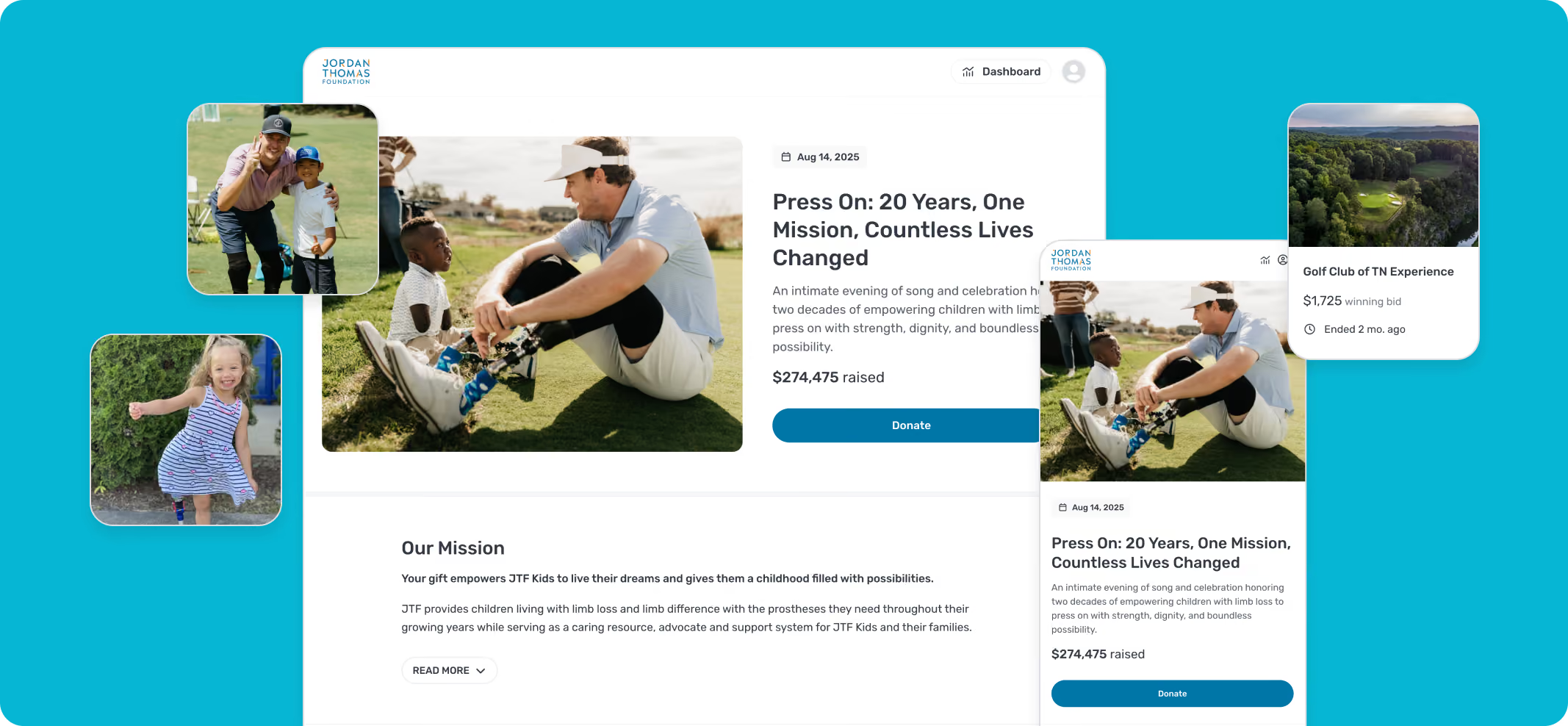
The gap: The team's existing tools were built for golf tournaments, not galas, and lacked the polish or flexibility a milestone event demanded. It needed technology that could handle registration, sponsorships, and auctions without adding work for a small staff.
The fix: JTF built its event on Pledge It, the complete event fundraising platform, starting with registration and sponsorships. Mid-planning, the team pivoted to add both silent and live auctions, a change the platform absorbed without derailing the timeline.
The result: The gala sold 200 tickets against an original goal of 120 and raised $274,475, well past its target. End-of-night checkout took just 30 to 45 minutes with zero errors.
That is how to organize a fundraiser event that turns a first-time effort into a signature one, and it is what the most successful nonprofit fundraisers do year after year.
Put your fundraiser planning into action
You now have the full path from your first goal to your final thank-you. 10 steps, in the order you actually need them.
None of it requires a big team or a big budget. It requires a clear plan and the will to start this week.
Work the steps in order, and lean on your fundraiser planning checklist when the night feels close. Good fundraisers for nonprofits are built on preparation.
Remember that every event teaches the next one. The plan you build now becomes the head start you keep next year. That is the real reward of learning how to organize a fundraiser event: a system you can repeat and grow.
Pledge It, the complete event fundraising platform, can help you put that system into action by bringing donations, ticketing, auctions, and other essential event fundraising activities into one place. This gives your team more time to engage supporters instead of managing disconnected tools.
Your mission is worth the effort, and your community is ready to show up. Give them a reason, and give yourself a plan.
Your next great fundraiser starts now.