Endurance events draw millions of participants every year, and charity bib programs let nonprofits show up on race day without having to build the race themselves. So what exactly are they, how do they work, and when are they worth the effort?
This blog breaks down what charity bib programs are, where they fit within a peer-to-peer fundraising strategy, and what nonprofits should consider before committing to one.
What Is a Charity Bib Program?
In a charity bib program, a race organizer allocates a number of guaranteed entries to one or more nonprofit partners. The nonprofit distributes those bibs to runners who commit to raise a minimum dollar amount for the cause in exchange for a guaranteed entry into a sold-out or hard-to-enter race—the kind of event that typically requires years in a lottery to get into any other way. Common event types include marathons, triathlons, cycling races, and obstacle courses.
Charity Bib Program vs. Peer-to-Peer Fundraising
Both ask supporters to raise money on your behalf, but the setup is different. In a standard peer-to-peer campaign, your nonprofit creates the reason to give—the event, the challenge, the story—and the nonprofit carries more of the creative and logistical weight upfront.
In a charity bib program, most of that groundwork is already done. The race exists, the date is set, the crowd energy is built in, and the entry itself is the hook. Participants aren't fundraising out of goodwill alone. They want that spot, and for the most popular races, a lottery spot isn't guaranteed. Some runners apply for years before getting in. A charity bib bypasses that, and that's a much stronger motivator than a generic fundraising ask.
Your focus is on recruiting the right participants and supporting them through their campaigns.
Why Does the Charity Bib Program Work So Well?
All parties get something they couldn't easily get on their own. Race organizers get committed, motivated participants who are invested in finishing. Nonprofits get guaranteed revenue plus months of visibility as each runner shares their training journey with their personal network. And runners get access to races that are famously hard to enter any other way.
Hope Story, a nonprofit supporting families of children diagnosed with Down syndrome, grew their charity bib program to more than 1,600 runners per season and raised $1.3 million in roughly 18 months using Pledge It.
Because charity bib programs are a form of peer fundraising, individuals organize personal campaigns through your nonprofit. Each participant sets up their own personal fundraising page, creates personal fundraising goals, shares their story with their network, and collects donations on your organization's behalf. It's a personal campaign channeled through your cause.
How a Charity Bib Program Works
Organizing a charity bib program is simple in theory, but it still requires a clear fundraising process to guide fundraising efforts to the finish line. When participants feel supported, informed, and on track, they fundraise. When they don't, they can go quiet.
Here's what the infrastructure looks like from start to finish:
1. Secure Your Bib Allocation
Start by searching "[race name] charity partner program" or "[city] marathon charity bibs" to find races in your area and negotiate with the organizers to secure a set number of entries. Some races have formal charity partner programs with applications and deadlines, while others are more flexible. Your main commitments are the per-bib fee and the fundraising minimums tied to the bibs. Ask about both before you sign, along with whether the race requires you to use a specific fundraising platform.
Application windows run anywhere from 6 to 15 months ahead of race day, and many 2027 windows open between summer 2026 and winter 2026-27. Our Charity Bib Fundraising Kit puts the whole calendar in one place, along with a guide to which races fit a team your size.
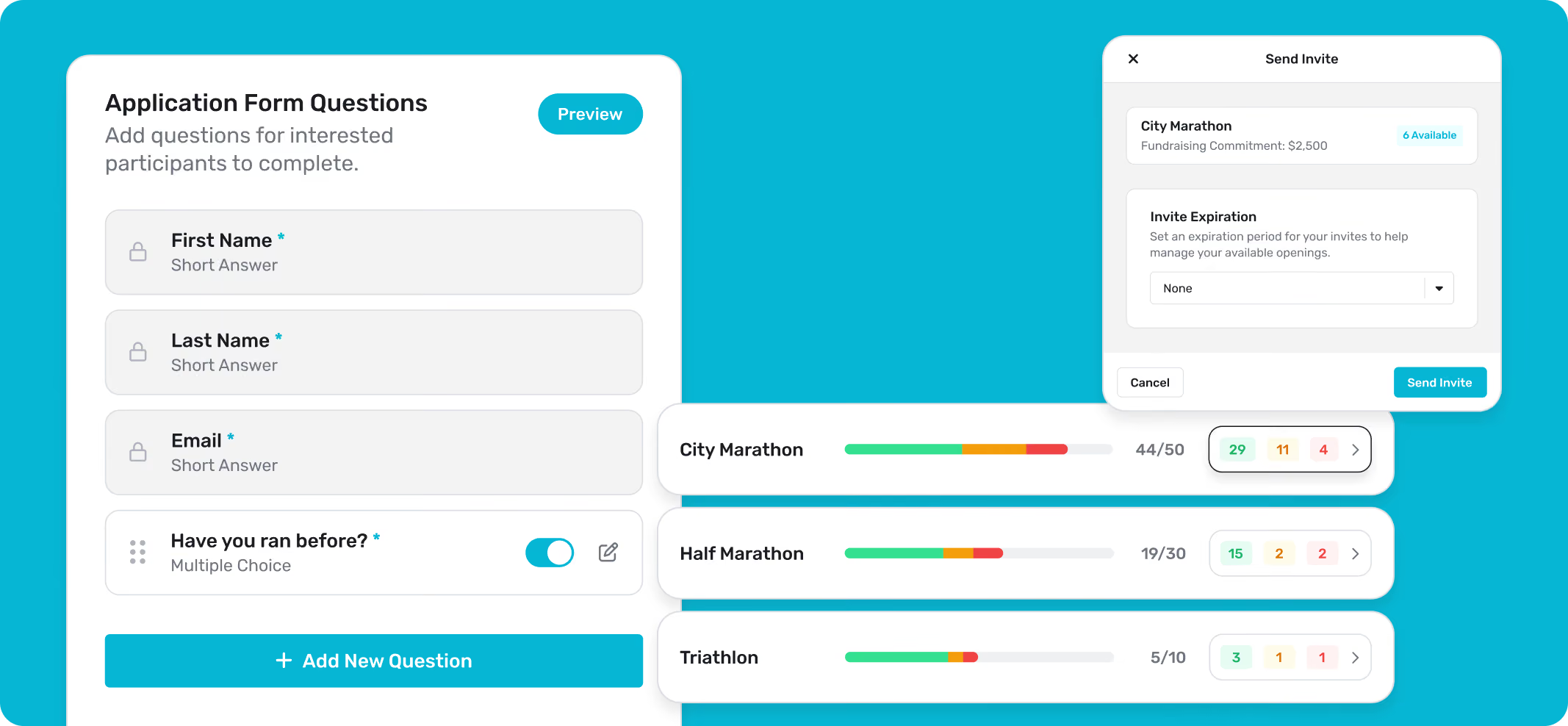
Once you've secured your allocation, Pledge It's bib management tools keep it organized: real-time bib availability across every race, allocation limits, and instant reassignment when someone drops out, so an unused bib doesn't sit there as wasted inventory.
2. Recruit Your Participants
Reach out to dedicated volunteers, community members, board members, staff, and supporters who are passionate about endurance events or eager enough to train for one. Together, they become the fundraising team that carries your bib program. Your pitch doesn't need to be complicated. A guaranteed spot in a sold-out or hard-to-enter race is compelling enough.
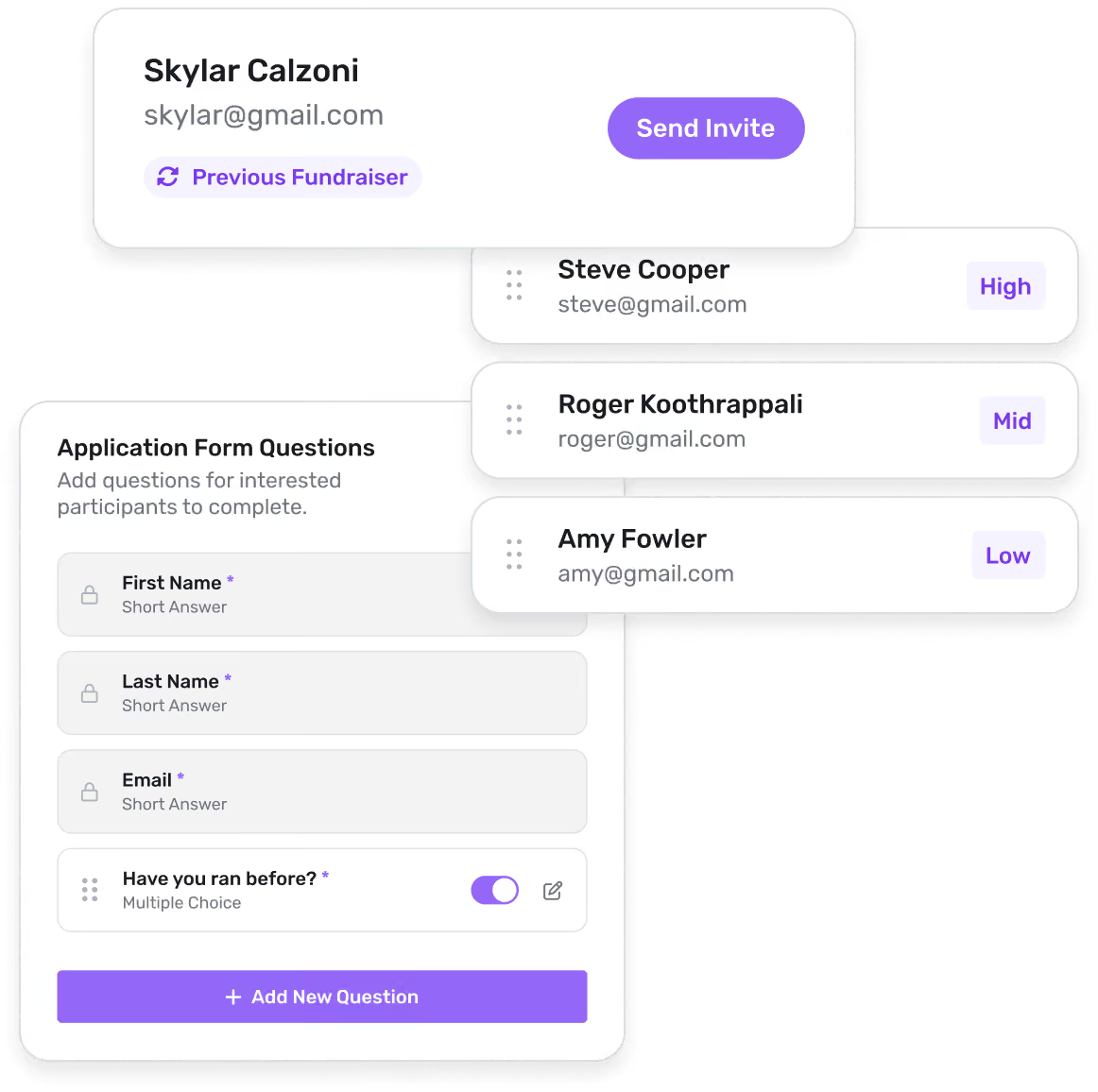
Pledge It's application tools help here, too. You can collect interest level and a quick story up front, recruit fundraisers strategically by ranking applicants, and maintain an automated waitlist for backfill, so every bib goes to someone you deliberately chose, not just whoever asked first.
3. Set Up Individual Fundraising Pages
Each participant will need their own personalized campaign page linked to your main campaign page. This online donation page is their home base, where they tell their story, set their fundraising goal, and rally their network to donate. Create campaign pages that make the setup process simple so participants jump in immediately. Every individual fundraising page links back to your main campaign so donors can see the full program picture.
4. Participants Fundraise Through Their Personal Networks
Participants do the outreach on your behalf—invite supporters via email, social media posts, direct asks to friends and family, and to potential donors your organization likely would not have reached if not for this extension of reliable volunteer fundraisers.
Built-in fundraising page tools make this easy to support: photo uploads, a story field, and one-click social sharing help participants spread the word, while automated receipts go out to every donor without adding work on your end. When supporters fundraise through their personal connection to your cause rather than a generic appeal, donation rates tend to be stronger. Pledge It's own data shows donors are twice as likely to give when recruited by a friend.
5. Track Progress and Support Participants Through the Campaign
Recruiting the right people gets participants in the door, but what happens between registration and race day determines whether they hit their goals. Consistent check-ins, progress updates, and timely recognition keep participants moving.
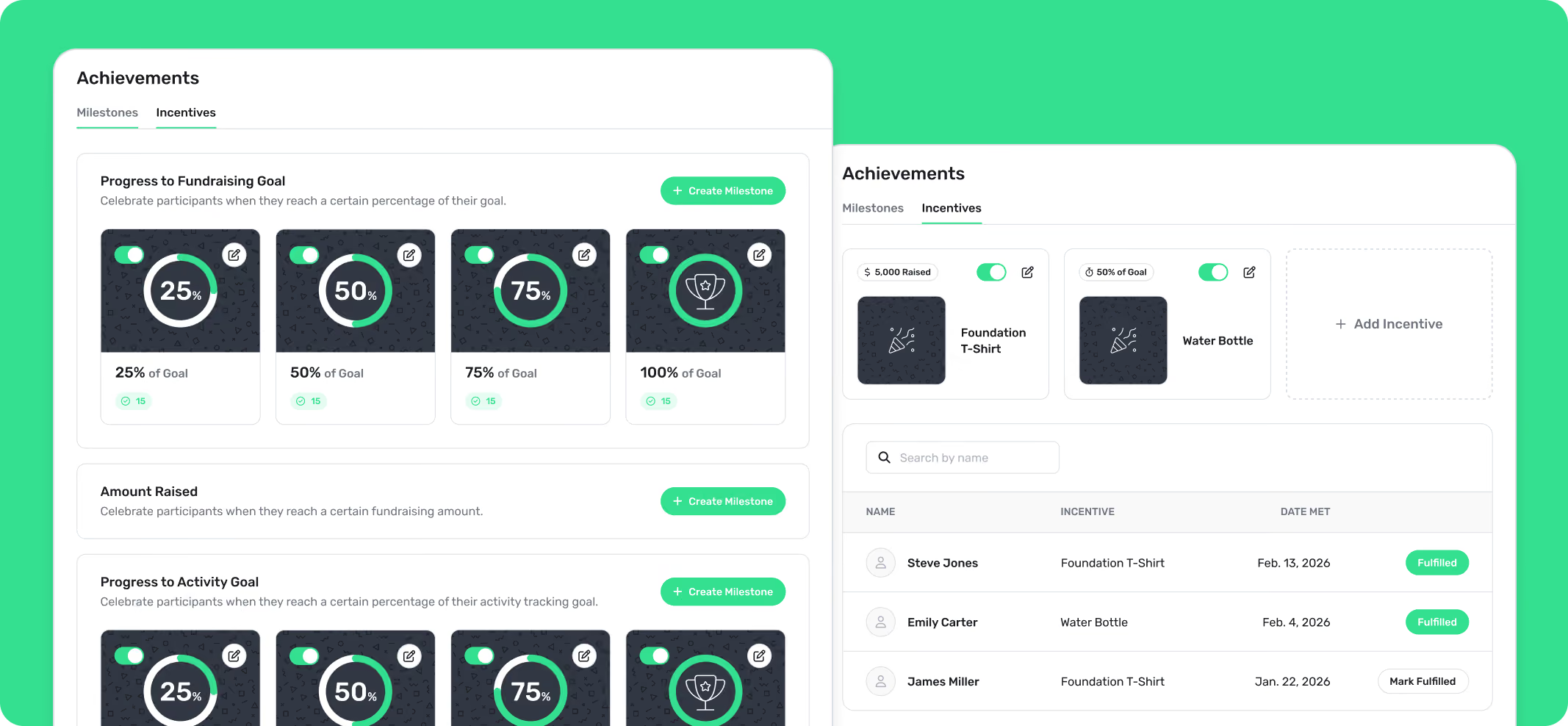
With Pledge It, you can set fundraising milestones and automatically notify participants when they hit them, whether that's a congratulatory message at $250 raised or a reward like a team jersey at $1,000. Participants know exactly what they're working toward, and your team has a built-in tracking dashboard to see who's qualified and manage fulfillment without a separate spreadsheet.
The Upside: Why Nonprofits Use Charity Bib Programs
One advantage of a bib program is that you can start small. Secure a handful of spots, treat your first event as a proof of concept, and use each year to grow both your participant base and the relationships that keep new supporters coming back.
Raise Awareness Beyond Your Usual Circles
When participants share their peer-to-peer pages, they're introducing your nonprofit to friends, family, coworkers, potential donors, and new supporters who may have never heard of you. That's community outreach without your team initiating a single conversation. Every participant who trains, posts updates, and asks for support puts your nonprofit's name and mission in front of their network through social media posts, personal conversations, and race day visibility that a standard appeal email can't replicate.
That exposure compounds over time. Each peer-to-peer fundraiser's story reaches people who may become donors, volunteers, or future participants themselves. You're not just raising money from the people in the room. You're expanding who's in the room.
Competition helps too. Leaderboards, team fundraising pages, and visible progress against other participants keep energy high throughout the peer-to-peer campaign. Seeing where they stand can push people to do more.
Lower Lift Than Running Your Own Event
Permits, course logistics, volunteers, timing systems, and registration management are a significant operational undertaking. In a charity bib program, that work belongs to the race organizer. That leaves your team free to do the work that raises money: recruiting strong participants and supporting them through their campaigns to maximize fundraising revenue and hit or exceed their goals.
The Honest Downside: What to Know Before You Commit
Charity bib programs are powerful peer-to-peer fundraisers, but that doesn't mean they're hands-off. You'll have financial commitments, participant coordination, and a race calendar you can't control.
Fundraising Minimums Create Real Financial Exposure
Fundraising minimums are tied to each bib, making your nonprofit responsible for meeting those minimums regardless of how participants perform. The more bibs you take on, the higher the stakes. That means vetting your participants before you commit. Your budget, your relationships, and your reputation are all on the line.
The protection is a signed runner agreement, a card on file, and two charge dates set before you approve anyone: 50% at the midpoint and 100% two weeks before the race. Nearly every established charity team at the major races uses some version of this. The kit includes a one-page runner agreement template and the full 50% deadline protocol.
How Pledge It helps: Knowing who you're awarding bibs to before you commit is half the battle. Pledge It's application tools give you the information you need to make that call, such as commitment level, fundraising history, and a ranked view of your applicant pool, before a single bib is assigned. Our platform also supports card on file with scheduled 50% and 100% charges.
Participant Management Gets Complex Fast
The more participants you recruit, the more moving pieces you're managing. You need to keep track of who's hit their goal, who's stalled mid-campaign, who hasn't set up their fundraising page since registering.
How Pledge It helps: A live dashboard shows every participant's progress toward their minimum, so you can spot who's falling behind a key milestone—like 50% of their goal by a certain date—and step in before it becomes a problem.
Without Structured Support, Bibs Go Unused
What happens after registration determines whether your program hits its goal. Participants who feel supported and recognized throughout the campaign follow through; those who don't go quiet, and bibs go unused. Proactive check-ins, milestone celebrations, and clear expectations from day one make the difference. Give supporters the right tools, and most will get there on their own.
The right fundraising software takes the tracking off your plate, like flagging who's falling behind before it becomes a problem, automating milestone recognition, and freeing your team to focus on the moments that actually need a personal touch rather than chasing 40 participants across spreadsheets and email threads.
How Pledge It helps: The platform flags who's falling behind before it becomes a problem and automates check-in communications, so your team spends time on the participants who actually need a personal conversation.
Charity Bib Program vs. Building Your Own Endurance Event
At some point, a successful bib program raises a natural question: should we just run our own race? It's worth thinking through carefully, because the two models are more different than they appear.
What You're Taking on When You Build Your Own Event
When your nonprofit produces its own endurance event—a 5K, a charity walk, a cycling ride—you become the race organizer. That means permits, course logistics, timing systems, volunteer coordination, registration management, liability insurance, participant safety, and day-of operations all land on your team.
For nonprofit organizations without event production experience or dedicated staff, this is a significant undertaking that can easily consume more resources than the event raises in its first year or two.
Where Bib Programs Have a Structural Advantage
A charity bib program lets you access the fundraising upside of an endurance event (motivated participants, personal networks, peer fundraising dynamics) without producing the event itself.
You're essentially renting the motivation of a major race without owning its operational complexity. As a fundraising method, it's one of the more efficient ways to run a peer-to-peer campaign for most nonprofits, especially those newer to endurance fundraising.
When Building Your Own Event Makes Sense
The math shifts when your bib program has matured, and you have a clear picture of your participant base, fundraising revenue, and team capacity. Organizations that consistently max out their bib allocation, have a loyal returning participant base, and want more control over branding, timing, and donor experience are often good candidates for an owned event.
It's also worth considering your community. If your supporters are concentrated in one region and would show up for an event your organization organizes, the owned model can build deeper loyalty than plugging into someone else's race.
The Charity Bib Fundraising Kit
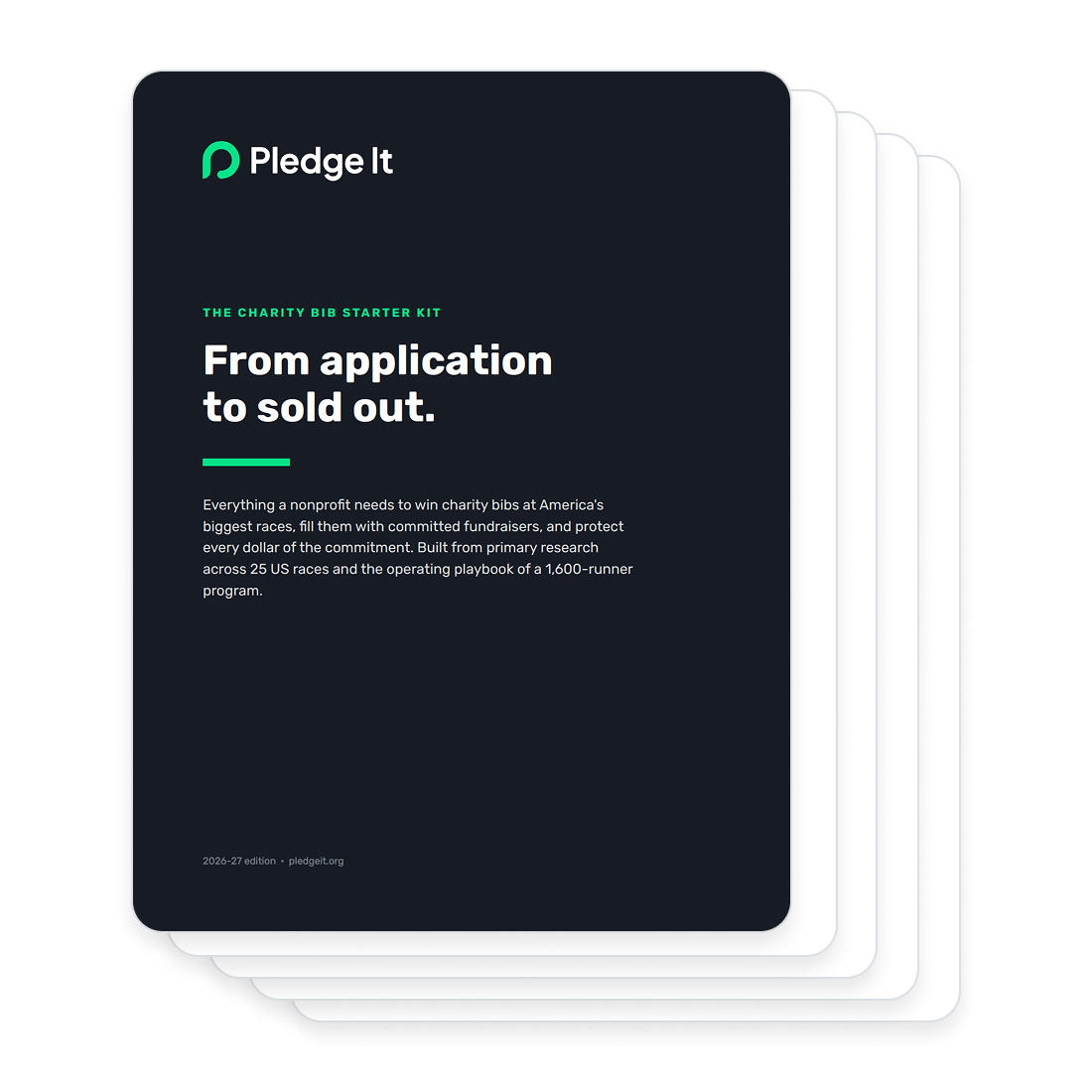
Everything in this guide, plus the paperwork. The full 2027 application calendar, a readiness checklist, the 50% deadline protocol, and three editable templates: the application narrative, the runner agreement, and six recruitment emails and posts timed to the rejection calendar. Built from research across 25 US races and the operating playbook of a 1,600-runner program.
Is a Charity Bib Program Right for Your Nonprofit?
Not every nonprofit is in the right frame of mind, time, or place to launch a bib program, and that's okay. Before you commit, it's worth asking yourself and your team a few honest questions.
Do you have an endurance-minded community?
Bib programs work best when you already have a group of athletes or active supporters who run, walk, or compete in races. Maybe some supporters have been waiting for the right opportunity to come along.
If you're not sure who would participate, start conversations with the people who already show up for you. Volunteers, recurring donors, and past event participants are often looking for a deeper way to engage. They just might not have been asked the right way yet.
Can you cover bib costs with realistic recruitment?
Look at your numbers: what bibs cost, how many participants you need to break even, and what a realistic fundraising average looks like per person.
Most races don't publish what a bib costs. Of the 25 races we researched, only one did, so ask the program manager directly. Industry estimates run $1,000 to $5,000 or more per bib at the major marathons. The kit has the five questions to ask every race before you sign.
Do you have someone who can own this program?
A bib program runs on commitment, from the race organizer, from your participants, and from inside your own organization. Picture the person or people on your staff who could realistically take this on as a priority. If no one comes to mind, that's important to know. Without a clear owner, recruitment stalls, participants go quiet, and the program slowly loses momentum before race day even arrives.
Do you have enough runway?
Before you commit to a race, ask yourself: do you have enough time to do this the right way? Recruiting participants, onboarding them, and giving them enough runway to fundraise before race day takes more time than most organizations expect. Build in more lead time than you think is necessary. The specifics matter less than starting early enough that participants aren't scrambling.
How to Set Your Program Up for Success
When you give participants the right tools, clear expectations, and ongoing support, they're far more likely to hit their goals and come back next year. Here's what the most successful programs have in common:
- Start modestly, especially in your first event. Prove to yourself, your staff, and your participants that you can handle this type of event before you go big.
- Give every participant a suggested goal, example language, and a prompt to share their own story. If they're stuck on how to ask, a social media post template, a sample email, or a text to send family can get them moving. When participants feel confident asking, their networks understand exactly why this race matters to them.
- Build in structured check-ins and milestone communications so participants know you're always there for them, not just at registration and race day. Send a monthly balance update to every participant from approval to race day, add near-milestone nudges, and reach out personally to anyone sitting at $0. Regular touchpoints keep supporters informed of where they stand in their fundraising journey, and they make the 50% and 100% deadlines a reminder instead of a surprise.
- Use leaderboards and team fundraising dynamics that encourage friendly competition and keep fundraising energy high throughout the campaign. When participants can see their ranking, celebrate top fundraisers, and rally as a team, your bib program starts to feel like one of your flagship fundraising events rather than a side project.
- Track funds raised in one place. A single view of who's registered, who's fundraising, and who's falling behind gives your team a clear picture of when and where to provide encouragement, resources, or a quick check-in when someone goes quiet.
And when the race is over, the work doesn't stop. Returning participant history makes it easy to identify your best fundraisers and bring them back for next year.
What a Successful Charity Bib Campaign Timeline Looks Like
One of the most common mistakes in a first bib program is underestimating how much lead time the whole process actually needs. Here's what a well-paced campaign plan looks like from start to finish.
12 to 10 Months Out: Apply and Confirm the Details
Research races, reach out to charity partner coordinators, and get your application in well before windows close. The best races fill their charity allocations early. Before you sign anything, confirm the per-bib fee, whether the race requires a specific fundraising platform, the bib-return deadline, and the fundraising minimums and cancellation terms. Then price your own minimum against the market and against what you'll deliver.
10 to 8 Months Out: Build Before You Market
Get the machine ready before you promote a single bib: application form live, runner agreement drafted, card on file and both charge dates set up in your platform, and a monthly communication calendar. If enforcement isn't in place, hold off on recruiting. Retrofitting it onto runners you've already approved is how programs lose money.
8 to 6 Months Out: Recruit in Waves
Market your bibs to three sources: your supporter base, runners who just missed out on a lottery or qualifying cutoff, and returning participants. Time outreach to results week when you can. Screen every applicant, including returners, and use your application to prioritize commitment level before awarding spots.
6 to 5 Months Out: Approve Deliberately
Approval means the application is reviewed, the agreement is signed, a card is on file, and the welcome email is sent. Get individual fundraising pages live right away and send a kickoff message with clear expectations: their minimum, both deadlines, and what support they'll get. The sooner supporters fundraise, the better. Early momentum is one of the strongest predictors of hitting a goal. Share a few fundraising ideas at this stage so no one stalls at the starting line. If the race gives you registration codes, consider holding them until a participant reaches 50%.
5 to 3 Months Out: Active Coaching and Milestone Recognition
This is a critical phase of the fundraising process. Send monthly balance updates from your platform, check in personally with anyone sitting at $0, recognize participants who hit milestones, and flag anyone falling behind early enough to course-correct.
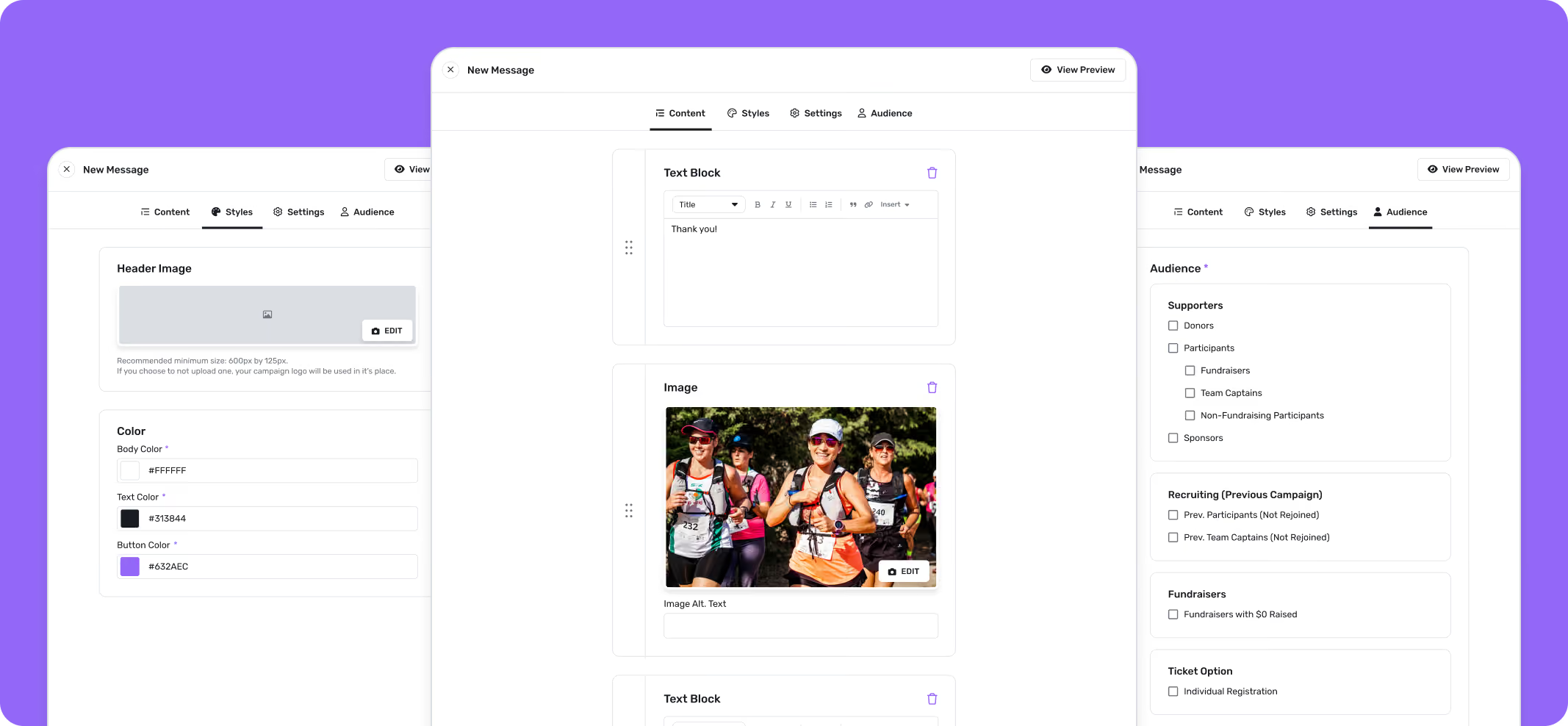
Pledge It's Message Center lets you send targeted communications directly to your participant group from the campaign dashboard—no exported lists, no separate email tool. Use it to send mid-campaign progress updates, near-milestone nudges, and recognition messages to the whole group at once. When someone hits a milestone, the Achievements feature handles the individual recognition automatically, so your manual outreach can stay focused on the participants who actually need a push.
About 3 Months Out: The 50% Deadline
At the midpoint between approval and race day, or two weeks before the race's bib-return deadline, whichever comes first, every participant needs to be at half their minimum. Charge cards for any shortfall. A declined card now leaves months to release the bib and refill it. A declined card two weeks before the race leaves you with nothing. Have the tough conversations early, not the week of the deadline.
3 to 1 months out: Refill and Keep Going
Offer released bibs to your waitlist before the race's bib-return deadline. Keep the monthly updates going, and start the conversation about the final deadline with anyone under 75%.
Two Weeks Out: The 100% Deadline
Charge cards for any remaining balance. If you've sent monthly updates since approval, nobody is surprised and most participants have already cleared it. Use this window for a final push: celebrate progress, help anyone still short with donor ask templates, and encourage supporters in your broader network to share participants' campaign pages one last time.
Race Weekend and the Week After
Have at least one staff member on the ground, host a team gathering, and cheer visibly until your last participant finishes. Recognize your top fundraisers publicly. Send a survey within 24 hours, then a thank-you to every participant and their donors that includes their individual impact number. The next-race ask should go out within 48 hours, while participants are at peak connection to your mission. Make it easy for them to say yes to next year.
Charity bib programs can be a strong fit for the right nonprofit, but they don't run themselves. The strongest programs recruit participants intentionally, equip them with clear guidance and tools, and stay engaged from signup to race day.
FAQs on Charity Bib Programs
What's a good fundraising minimum for a charity bib program?
How many bibs should a first-time nonprofit take on?
Do participants keep the donations they raise if they don't hit their minimum?
Can a nonprofit run a charity bib program alongside other peer-to-peer fundraising events?
How do I get charity bibs for a specific race?
Ready to make charity bib programs part of your peer-to-peer strategy?
Get the full playbook, application calendar, and three ready-to-use templates.