There's a particular energy in a room during a silent auction. Guests browse the tables, place a bid, then keep drifting back to check whether someone has outbid them. By the time bidding closes, half the room is watching one item.
That energy comes from the catalog of silent auction items. Get it right, and guests support your cause and take home something they genuinely wanted. Get it wrong, and you spend the evening watching a table of unsold gift baskets.
Two things separate the two outcomes.
- Items nobody can price. The moment a guest finds your item on Amazon, bidding stops at retail. Experiences and access have no comparable price, so bidding runs on desire rather than arithmetic.
- A range of price points. Price everything high, and most of your guests become spectators. A catalog with genuine entry-level items brings the whole room into the bidding, and those bidders come back next year.
We’ve curated a list of silent auction items that your team can easily source to conduct a successful fundraising event.
What Is a Silent Auction?
A silent auction is a fundraiser where items are displayed for guests to bid on without an auctioneer. The highest bid at the end of the auction wins.
The term “silent” auction means the bidding happens quietly alongside whatever else is going on, so a dinner, gala, or program can run at the same time.
Guests bid in one of two ways:
- Paper bid sheets: Guests write down their name and bid amount next to each item.
- Mobile bidding: Guests use their phones to bid and receive text alerts if someone outbids them.
Find the right silent auction platform for your nonprofit
35+ Silent Auction Ideas, Organized by Category
We've grouped these silent auction ideas by category, so you can browse with ease and start with the one that best fits your event.
Note: The values throughout this guide are typical ranges to help you plan tiers. Set the actual fair market value from what the donor tells you the item is worth, and state it on the listing.
Local Business and Community Access as Auction Items
Local businesses say yes more often than you'd expect. Donating an experience costs them very little and puts their name in front of a room full of local customers who already care about something.
1. Shop Local Bundle
Collect $25 gift cards from four or five businesses on the same street, like a coffee shop, a bookstore, a hardware store, or a bakery, and present them as one package tied to a neighborhood.
Small asks get approved fast. A business owner who hesitates over a $200 donation signs off on $25 without leaving the counter. Five of those become an item worth more than the sum of its parts.
- Typical value: $100-$150
- Start bidding at: $40
- Tier: Entry
- Best for: First-time auctions, community organizations, and any nonprofit with volunteers who shop locally.
2. Farmers Market Season Pass
Gather vouchers from a spread of market stalls, such as produce, bread, flowers, honey, cheese, and bundle them in a reusable market tote.
The winner gets a reason to return every Saturday through the season, and your vendors get repeat foot traffic from a customer who now associates them with your cause. Vendors understand that trade immediately, which makes this one of the easier asks on the list.
- Typical value: $75-$150
- Start bidding at: $30
- Tier: Entry
- Best for: Food security organizations, community groups, and faith-based nonprofits.
3. Behind-the-Scenes Brewery or Distillery Tour
Organize a small-group tour of a local brewery or distillery during a quiet weekday afternoon, where staff can provide tastings.
Ask for a Tuesday or Wednesday. Weekday capacity costs the business almost nothing, and staff generally enjoy showing people around far more than they enjoy another Saturday rush.
- Typical value: $200-$400
- Start bidding at: $75
- Tier: Mid
- Best for: Organizations with a young professional supporter base or an active board.
Note: Several states restrict auctioning or raffling alcohol without a specific permit, and some prohibit it outright for nonprofits. Confirm your state's rules before listing any item that includes alcohol. A tasting experience hosted on the licensee's premises is often treated differently from a bottle you hand over.
4. After-Hours Private Shopping Hour
This exclusive experience feels more personal and enjoyable than a standard gift card.
Arrange a special shopping hour after closing time at a local boutique, just for the winner and their friends. A stylist can assist with shopping, and guests receive discounts on their purchases.
This one draws bids from friend tables rather than individuals, which is exactly what you want. Three people at the same table talking each other into it produces a higher final number than one person deciding alone.
- Typical value: $150-$300
- Start bidding at: $60
- Tier: Mid
- Best for: Women's organizations, schools, and events with a strong social dynamic.
5. Reserved Parking Spot for a Year
Offer a reserved parking spot in a location where supporters often visit, like a downtown garage or a busy gym.
The value here is convenience. The winner benefits from it every week, which makes it one of the more memorable auction-item ideas on the table.
- Typical value: $300-$1,200
- Start bidding at: $120
- Tier: Mid to premium
- Best for: Schools, faith-based organizations, and any nonprofit with its own facility.
6. Coffee With a Local Leader
Offer an hour with a respected business owner, chef, coach, or elected official. Access is genuinely scarce, and that's the whole product.
This works best when the leader has a story your guests want: how they built the business and how they got the role. Frame the listing around the conversation instead of the coffee.
- Typical value: Hard to price, which is the point
- Start bidding at: $50
- Tier: Mid
- Best for: Youth development organizations, chambers-adjacent nonprofits, and anyone with a well-connected board.
Food, Drink, and Culinary Experiences
Restaurants and food businesses thrive on relationships, and many owners prefer to donate experiences rather than funds.
Here are some great silent auction ideas that make use of this preference:
7. Chef's Table Dinner
Enjoy an exclusive meal prepared by a chef in a private corner of a local restaurant or even in the kitchen.
Ask for a Tuesday or Wednesday. Slow weeknights cost the restaurant a fraction of a Saturday, and most chefs jump at the chance to cook something the regular menu doesn't allow. This item consistently outperforms its food cost by a wide margin.
- Typical value: $500-$1,000
- Start bidding at: $200
- Tier: Premium
- Best for: Galas and dinners with an established donor base.
8. Wine or Craft Beer Tasting at Home
A local shop can create a tasting flight and deliver it to the winner’s door, along with a cheese board.
Each bottle includes a card with tasting notes, making it a fun at-home experience for entertaining friends.
- Typical value: $150-$300
- Start bidding at: $60
- Tier: Mid
- Best for: Adult-audience events. See the alcohol note under item 3.
9. Backyard Barbecue Package
Pair a smoker or grill rental with an afternoon walkthrough from a competitive barbecue cook, then add a spice rub set and a butcher's gift card.
Local barbecue clubs and competition teams are full of people who will happily teach for an afternoon, since they're already spending their weekends doing it.
- Typical value: $300-$600
- Start bidding at: $120
- Tier: Mid
- Best for: Sports organizations, youth programs, and community events with a family crowd.
10. Dessert of the Month
A local bakery can deliver a cake or pastry box to the winner’s home each month for a year.
Guests bid on this because it keeps arriving. A gift card gets used once and forgotten, while this shows up again every few weeks.
It works well for families and anyone who likes marking small occasions at home.
- Typical value: $300-$500
- Start bidding at: $120
- Tier: Mid
- Best for: Family-focused organizations and schools.
11. Coffee Subscription With a Handmade Mug
Three months of beans from a local roaster, paired with a one-off mug thrown by a local potter.
The mug carries this item. It's genuinely unique, it can't be price-checked, and the winner keeps using it long after the coffee runs out. Two small asks combine into something that reads as far more considered than either alone.
- Typical value: $80-$150
- Start bidding at: $30
- Tier: Entry
- Best for: Any auction needing more entry-tier items, which is most auctions.
Travel and Weekend Getaways as Silent Auction Ideas
Travel-related items often attract the highest bids at events, so consider options that are within driving distance to allow more guests to participate.
12. Regional Bed-and-Breakfast Stay
Offer a weekend at a cozy inn a few hours away, without the hassle of flights.
Innkeepers usually have off-peak times when they can donate a midweek or lower-demand night. Check with them about suitable dates and include any restrictions honestly in your listing.
- Typical value: $300-$600
- Start bidding at: $120
- Tier: Mid to premium
- Best for: Any auction with couples in the room.
13. Lake-House or Cabin Weekend
The winner gets a weekend at a lake house or cabin, usually within a few hours' drive.
These bids can get quite competitive because a weekend escape appeals to both families and couples.
Be sure to get the available dates, cleaning responsibilities, and insurance details in writing before listing it.
- Typical value: $600-$1,500
- Start bidding at: $500
- Tier: Premium
- Best for: Organizations with property-owning supporters. Ask your board first.
14. Nearby City Overnight
Bundle a hotel night in a city an hour or two away with passes to a museum, zoo, or aquarium.
Hotels donate rooms more readily than most nonprofits expect, and attractions hand out passes with barely a conversation. Two easy asks produce a package that photographs well in your preview email.
- Typical value: $250-$500
- Start bidding at: $100
- Tier: Mid
- Best for: Family audiences and first-time auctions building a mid tier.
Wellness and Self-Care Auction Ideas
Studios and spas offer experiences, making them great choices for donations. Here are some simple and appealing auction item ideas at mid-tier price points:
15. Studio Membership Block
Three months of unlimited classes at a yoga, Pilates, spin, or climbing studio.
Ask for a pass that lets the winner bring a friend. It roughly doubles the perceived value at no extra cost to the studio, and it gives the studio two potential members instead of one, which is the argument that gets you a yes.
- Typical value: $300-$500
- Start bidding at: $120
- Tier: Mid
- Best for: Health organizations and events with an active supporter base.
16. Spa Treatment Pairing
A massage and a facial booked together as one visit.
Pairing treatments produces higher bids than either alone, because it reads as a half-day rather than an errand. Push for a 12-month expiry, since popular appointment slots book out months ahead, and a short window turns a prize into a chore.
- Typical value: $200-$350
- Start bidding at: $80
- Tier: Mid
- Best for: Any auction. This is one of the most reliably sellable items on the list.
17. Skincare Set Chosen by an Esthetician
Rather than a random assortment of products, ask a local esthetician to build a set for a specific skin type and write a short note on how to use it.
It also makes the ask easier, because the esthetician's name goes on the listing and the winner becomes a likely client.
- Typical value: $100-$200
- Start bidding at: $40
- Tier: Entry to mid
- Best for: Auctions needing entry-tier depth.
Sports, Entertainment, and VIP Experiences
Chase local access over professional seats. A minor league team's community relations office will take your call; a major league team's might not.
18. Minor League or College Game Package
The winner gets four tickets to a minor league or college game, with parking covered and ideally a field visit before the first pitch.
Families love this experience. The close seating and easy planning make it enjoyable, and kids often cherish memories of meeting the mascot far more than the game score.
Contact the team’s community relations staff early in the season, as donation slots fill quickly.
- Typical value: $150-$400
- Start bidding at: $60
- Tier: Mid
- Best for: Youth organizations, schools, and family-heavy events.
Find sports fundraising ideas that fill seats and raise funds
19. Golf Outing for Four
Enjoy a round of golf at a local course, complete with carts and a bucket of range balls.
Many courses donate rounds, especially on weekday mornings. Always ask the pro shop for comped play, as they have more authority over donations than the front desk.
Typical value: $400-$800
Start bidding at: $150
Tier: Premium
Best for: Golf and sports organizations, First Tee and PGA chapters, and any nonprofit with corporate supporters.
Success Story
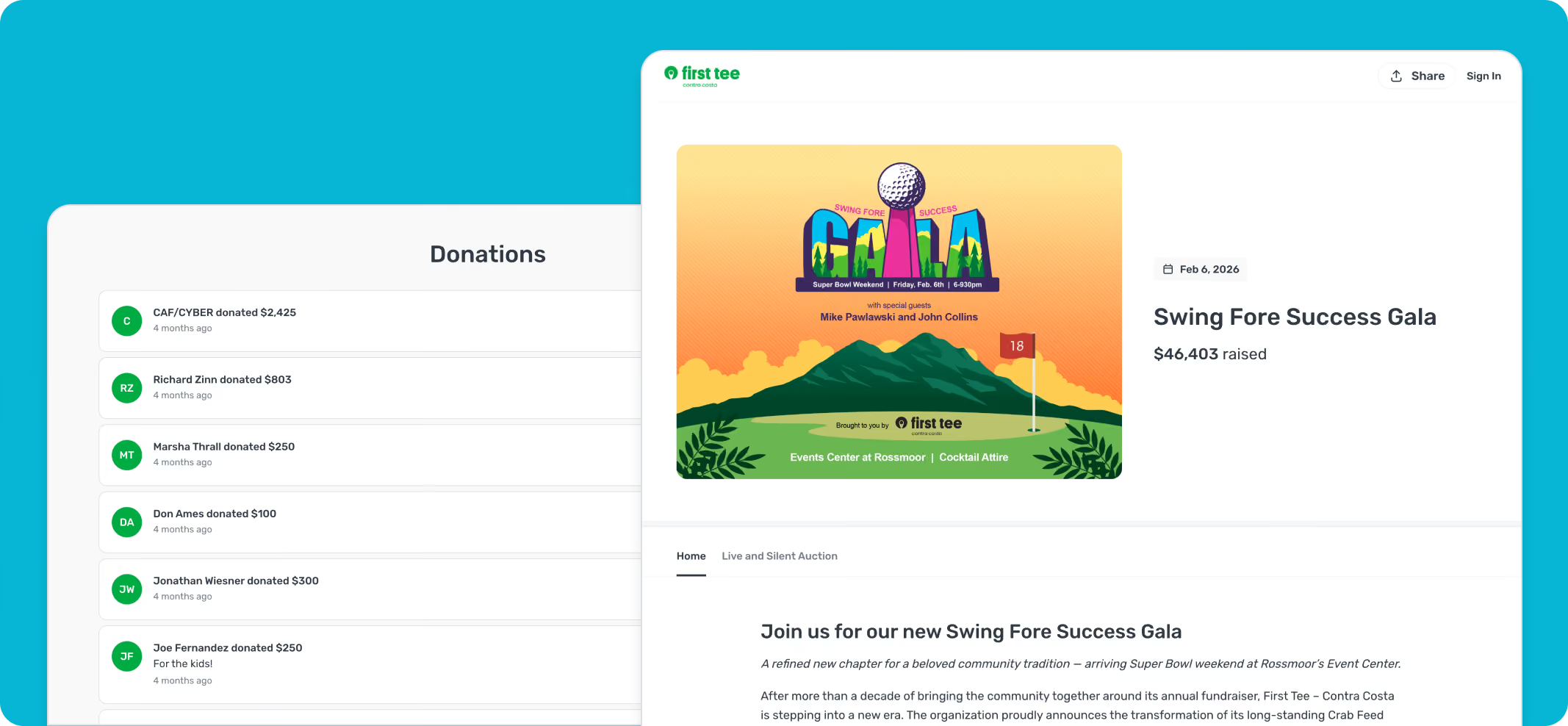
How First Tee Contra Costa Grew Fundraising 5x With Pledge It
First Tee Contra Costa previously managed their events on paper, losing track of donor contacts and limiting fundraising to around $25K.
By switching to Pledge It (the complete event fundraising platform) for sponsorships, ticketing, and check-in, they captured every donor in a single platform. Their February gala generated $80K, and they are now on track for $150K by year-end, an impressive 5x increase.
20. Private Screening Night
Rent an independent cinema for an afternoon and let the winner pick the film for twenty friends.
Independent cinemas have dead weekday hours they'd rather fill. The winner choosing the film is what makes this an event rather than a ticket.
- Typical value: $400-$800
- Start bidding at: $150
- Tier: Premium
- Best for: Organizations with a younger donor base or strong friend-group dynamics.
21. Group Outing for Six
The winner gets an evening for six at an escape room, bowling alley, axe-throwing venue, or mini golf course.
Everything is pre-arranged, which simplifies planning. Include a pizza gift card to cover dinner, making it an appealing all-in-one package.
- Typical value: $150-$300
- Start bidding at: $60
- Tier: Mid
- Best for: Young professional boards and workplace-team audiences.
22. Theater Tickets With Dinner
The winner gets two tickets to a community theater show or a local concert, along with dinner at a nearby restaurant.
A well-planned evening is attractive to bidders, especially couples. Ensure the dinner reservation is for the same evening as the performance.
- Typical value: $150-$300
- Start bidding at: $60
- Tier: Mid
- Best for: Arts organizations and events with an older donor base.
Home, Lifestyle, and Everyday Services as Silent Auction Ideas
Service businesses donate labor rather than inventory, which is why these ideas for silent auction items convert so well during sourcing.
23. Seasonal Deep Clean
The winning bidder enjoys a complete deep clean of their home from a local cleaning service, scheduled at their convenience.
Agree on a square footage cap with the service provider upfront and state it in the listing. This item bids highest in the weeks before the holidays or at the end of a long winter, so time your event accordingly if it's in your catalog.
- Typical value: $250-$500
- Start bidding at: $100
- Tier: Mid
- Best for: Any auction with homeowners in the room.
24. Car Detailing
A local detailer cleans the winner's car inside and out, down to the vents and the upholstery.
Use a mobile detailer if you can find one. They come to the driveway, nobody drops a car off or waits around, and the convenience shows up in the bidding. The result is also visible daily for weeks, which makes for a happy donor.
- Typical value: $150-$300
- Start bidding at: $60
- Tier: Mid
- Best for: Broad audiences. Reliable in almost any catalog.
25. Lawn or Yard Care Season Pass
The winner gets a set number of mowing or landscaping visits spread across a growing season.
Clearly define the number of visits included in the auction listing.
- Typical value: $300-$600
- Start bidding at: $120
- Tier: Mid
- Best for: Suburban supporter bases and organizations in areas with real seasons.
26. Handyman Hours
A set block of hours from a local contractor for the small repairs that pile up.
Contractors donate readily in their slow months. Keep the task list open-ended. The flexibility is what makes the item attractive, and any winner will keep the requests reasonable.
- Typical value: $200-$500
- Start bidding at: $80
- Tier: Mid
- Best for: Homeowner-heavy audiences and organizations with trades on the board.
Family and Kid-Friendly Auction Items
Parents tend to bid differently than other guests because these items address specific needs. Here are some auction item ideas that work especially well at youth organization events:
27. Birthday Party Package
Parents appreciate this as party planning can be stressful.
Offer a bundled package that includes a venue booking, a cake from a local bakery, and decorations.
Consider partnering with trampoline parks, pottery studios, or children's museums to provide this package.
- Typical value: $300-$600
- Start bidding at: $150
- Tier: Mid
- Best for: Schools, youth organizations, and family-focused nonprofits.
28. Back-to-School Bundle With Tutoring
Create a backpack filled with essential school supplies along with a gift card for a few tutoring sessions.
The tutoring carries the value; the supplies make it feel complete. Launch this at an August or September event, when the need is immediate, and parents are already spending.
- Typical value: $200-$500
- Start bidding at: $80
- Tier: Mid
- Best for: Schools, education nonprofits, and youth development organizations.
29. Camp or Class Registration
Offer a week of summer camp or a season of classes at a local art, music, or activity center.
Camps are often willing to donate spots that they need to fill, so confirm age ranges and session dates before listing this item.
- Typical value: $300-$800
- Start bidding at: $120
- Tier: Mid to premium
- Best for: Schools, youth programs, and arts organizations.
30. Classroom Art Project
Each class in the school produces one collaborative piece, such as a canvas with every child's handprint, a mosaic tile panel, or a photo collage, and each goes to auction.
At school auctions, these routinely outbid donated luxury goods, and the reason is straightforward: only one family in the world wants that specific piece, and they want it very much.
- Typical value: Genuinely unpredictable
- Start bidding at: $50
- Tier: Entry opening, premium closing
- Best for: Schools and youth organizations. If you run a school auction and skip this, you're leaving money on the table.
31. Principal, Coach, or Mascot for a Day
The winning child runs the morning announcements, sits in the principal's chair, leads the team out, or wears the mascot suit at a home game.
Nothing on your table costs less or means more. These items have no market price, no comparison point, and enormous emotional value to exactly one family. Add a photo package, and the winner has something on the wall for twenty years.
- Typical value: No market value, mention that in the listing
- Start bidding at: $50
- Tier: Entry opening, premium closing
- Best for: Schools, youth sports organizations, and any nonprofit with a beloved staff member or mascot.
Silent Auction Ideas for Pet Lovers
If your guests bring photos of their animals out at dinner, build them a category. At animal welfare events these items outperform almost everything else.
32. Commissioned Pet Portrait
A local artist paints or illustrates the winner's pet from photographs, in whatever medium they work in.
Artists take these commissions willingly as they get a credit, exposure to a room of animal lovers, and a portfolio piece. Settle size, medium, and delivery timeline in writing before listing. Bidding on these tends to be emotional rather than rational, which is the best kind.
- Typical value: $200-$600
- Start bidding at: $80
- Tier: Mid
- Best for: Animal rescues and shelters, and any auction with a visibly pet-obsessed crowd.
33. Shelter VIP Day
The winner spends a morning behind the scenes at your shelter meeting the animals, shadowing staff, helping with a feed round. They also get naming rights on the next rescue intake.
For an animal welfare organization this is the single strongest item you can list, because it's the mission itself. Nobody else can offer it, and the winner leaves more attached to your work than any gift basket could achieve.
- Typical value: No market value
- Start bidding at: $75
- Tier: Entry opening, unpredictable closing
- Best for: Animal rescues, shelters, and sanctuaries.
Mission-Tied Keepsakes and Recognition
These cost the least and often raise the most, because you're the only supplier.
34. Dedication or Naming Opportunity
The highest bidder can honor themselves or a loved one by having their name inscribed on a brick, bench, plaque, or within a designated space in your program area.
This bid represents a lasting tribute rather than a physical product. Ensure you establish clear terms regarding the duration and wording before the auction begins to avoid misunderstandings later.
- Typical value: No market value
- Start bidding at: $150
- Tier: Premium
- Best for: Organizations with a facility, a garden, a trail, or a programme space.
35. Commissioned Artwork
A local artist creates an original piece inspired by your mission, with input from the winning bidder.
Artists gain a commission credit and exposure to your donor base. Agree on size, medium, and delivery timeline in writing before the item is listed.
- Typical value: $400-$1,500
- Start bidding at: $150
- Tier: Premium
- Best for: Arts organizations, and any nonprofit with artists in its community.
36. Reserved Table at Next Year's Event
The winning bid secures a named table at your next gala or dinner, complete with early entry and seating choice.
Guests who bid on this tend to fill those seats with friends and colleagues, most of whom have never heard of your work.
You give up a place card and gain a room full of new faces next year.
- Typical value: Your table price plus a premium
- Start bidding at: 50% of table price
- Tier: Premium
- Best for: Organizations running an annual gala with a waiting list, or hoping to build one.
How to Price Your Silent Auction Items
This is where most first-time auctions fall short, so it's worth getting right before you source a single item.
- Set the starting bid at 30-40% of fair market value. Open too high, and an item gets no first bid, and items with no first bid rarely get a second. Open low and you create momentum. A $500 weekend stay that opens at $175 will almost always finish higher than the same item that opens at $400.
- Set bid increments at roughly 10% of the starting bid. Increments that are too small drag bidding out; too large and bidders drop off. On a $175 opening bid, $20 increments work well.
- Add a buy-it-now price at about 150% of fair market value. Some guests would rather pay a premium than watch a bidding war all evening. On popular items, buy-it-now often closes the item at more than the auction would have produced.
- Stagger your closing times. Closing every item at once sends the whole room to their phones in the final two minutes and leaves half your items with one bid. Close in sections, with entry items first and premium last. You only get three or four rounds of urgency instead of one scramble.
How Many Items Do You Need?
Roughly one item for every two to three guests. A 150-person gala needs 50 to 75 items.
Over-sourcing is the more common mistake, and it costs you twice: a crowded table dilutes attention, and unsold items make the whole auction feel flat. If you have more items than that ratio suggests, bundle the weaker ones into packages rather than listing them separately.
If this is your first auction, aim lower. 10 to 15 strong items, priced properly and closed cleanly, will teach you more than sixty mediocre ones. Moreover, next year, you'll source with a list of what actually sold.
How to Source the Best Silent Auction Items?
These practices help with nearly every item on a nonprofit's table. Follow this order to maximize your success:
- Start with your inner circle: Ask every board member, staff member, and volunteer to name three businesses they already use and would feel comfortable approaching.
- Approach local businesses with a specific ask: Name the item, the event date, and the recognition on offer, since vague requests get vague answers.
- Return to last year's donors first: They are your strongest source of silent auction donation ideas. A follow-up request takes less effort and usually yields results.
- Apply to regional donation programs: Many companies run formal in-kind giving programs, though review cycles are slow and need several months of lead time.
- Send a personal introduction every time: A named contact converts far better than an email to a general inquiries address nobody reads closely.
- Ask during their slow season: A donated booking on a quiet weekday costs a business far less than a busy Saturday.
- Report results to every donor afterward: Tell them what their item raised, because that single message secures most of next year's list.
The Tax Rule Nobody Mentions
This catches out more first-time auctions than any other single thing, so it's worth two minutes.
In the US, when a guest wins an auction item, only the amount they pay above the item's fair market value is tax-deductible. Someone who pays $600 for a weekend stay worth $500 has made a $100 charitable contribution, not a $600 one.
That has 2 practical consequences:
- State the fair market value on every listing. Guests need it to know what they're bidding against, and you need it on the receipt. Get the value from the donor in writing when they commit the item.
- Send receipts that separate the two figures. A receipt showing "$600 paid, $500 fair market value, $100 deductible" protects the winner and you. A receipt showing $600 as a donation does not.
There's a useful tension here worth understanding.
You have to disclose fair market value, but items whose value is genuinely hard to benchmark, like a chef's table, an afternoon with the mascot, or a naming opportunity, still outbid retail goods. This is because the stated value doesn't cap what the experience is worth to the person who wants it. That's precisely why experiences beat merchandise.
Success Story
How the Jordan Thomas Foundation Ran Auctions at Its First Gala
After twenty years of relying on an annual golf tournament, the foundation planned its first gala for its 20th anniversary, built around 120 guests.
Auctions weren't in the original plan for the Jordan Thomas Foundation. The team had already set up on Pledge It for registration and sponsorship management, then decided partway through planning to add both a silent and a live auction. This is normally the point where you bring in a second platform three weeks out.
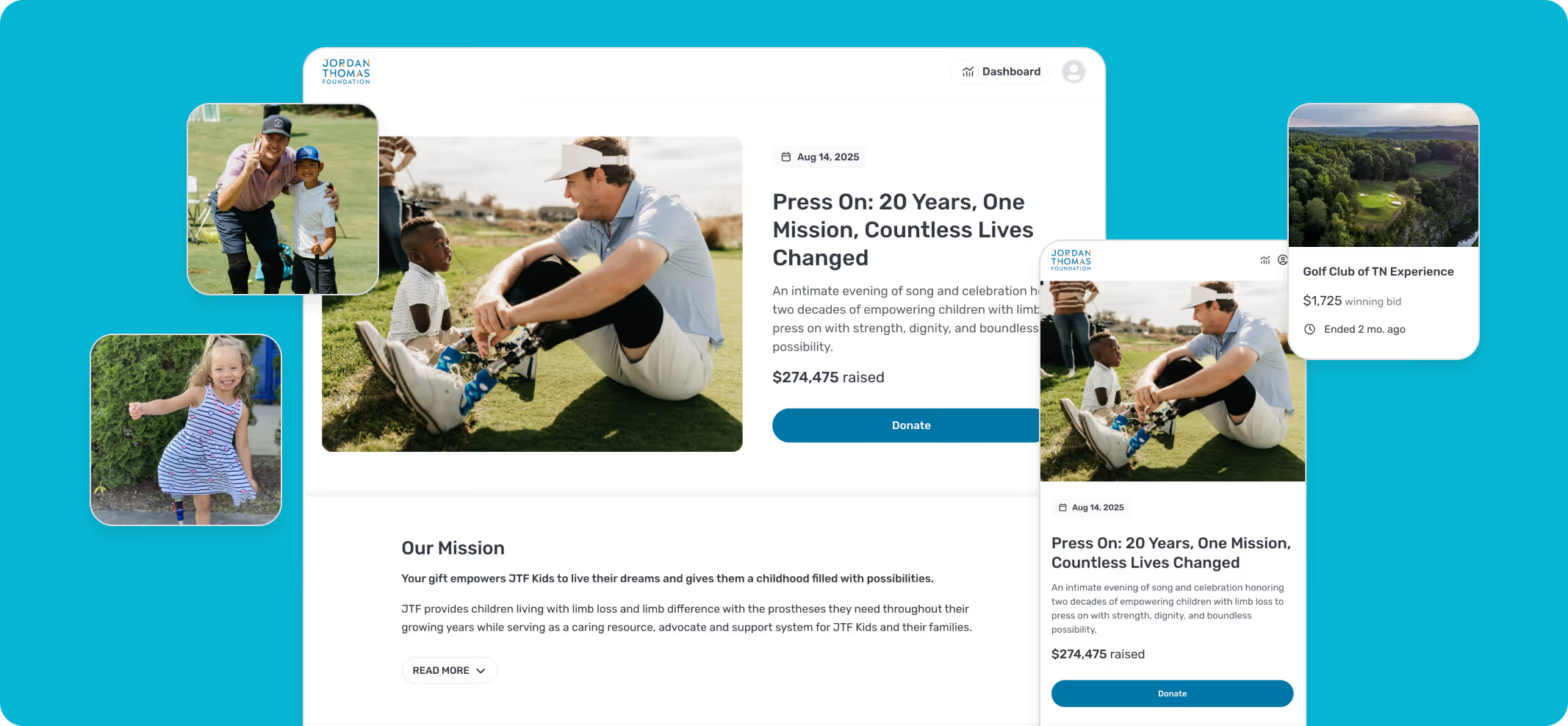
Instead, both ran on the tools already in place. The silent auction opened several days early, so guests browsed and bid before they arrived and kept bidding through dinner service.
The gala sold 200 tickets against a 120-person target and raised $274,475 across donations, sponsorships, registrations, and auctions. End-of-night checkout, including live auction payments, took 30 to 45 minutes.
Check out what their program coordinator had to say about Pledge It:
"If we had gone with anybody else, we wouldn't have been able to switch gears like we did in the middle of planning."
- April De Leon, Program Coordinator, Jordan Thomas Foundation
Make Your Guests Bid and Pay With Ease
A silent auction is one of the few fundraisers where your community supplies the prizes. Every donated round of golf or weekend cabin stay has someone's name behind it.
That is what makes the item list worth your time. Choose the categories that fit the relationships you already have, fill your mid and premium tiers first, then add entry items so more guests can bid.
Start those asks three to four months ahead. That runway covers the slow replies and follow-ups every sourcing season brings.
These silent auction ideas work at any size. Pick 10 strong items to sell on the night of the fundraiser, run them well, and let the list grow from there.
Once your items are ready, the night itself comes down to how easily people can bid and pay. Pledge It (the complete event fundraising platform) with silent auction power-ups handles auction bidding, outbid alerts, and checkout in one place, so your team spends event night with supporters.