The single most valuable thing you can do after a campaign is win the second gift. Thank donors fast, show them their impact, and make a specific, well-timed second ask, ideally within 90 days, before the glow of your event fades.
You just pulled it off. The peer-to-peer campaign hit its goal, the event sold out, the donation page lit up all weekend. Hundreds of people you'd never met before just gave to your mission.
Here's the uncomfortable question almost no one asks on Monday morning: how many of them will ever give again? Most organizations leave this almost entirely to chance, which means it's also almost entirely up to you to change it.
So, if your organization is like most, the honest answer is "not many." And that's the single biggest opportunity sitting inside nearly every great campaign. You already did the hard part—you got hundreds of new people to say yes once. The follow-up plan is what decides whether that's a one-weekend spike or the start of a donor base that compounds.
The good news: you don't need another event to fix this. You need to win one more gift.
Why Don't First-Time Event Donors Come Back?
Because giving once and becoming a donor are two very different things.
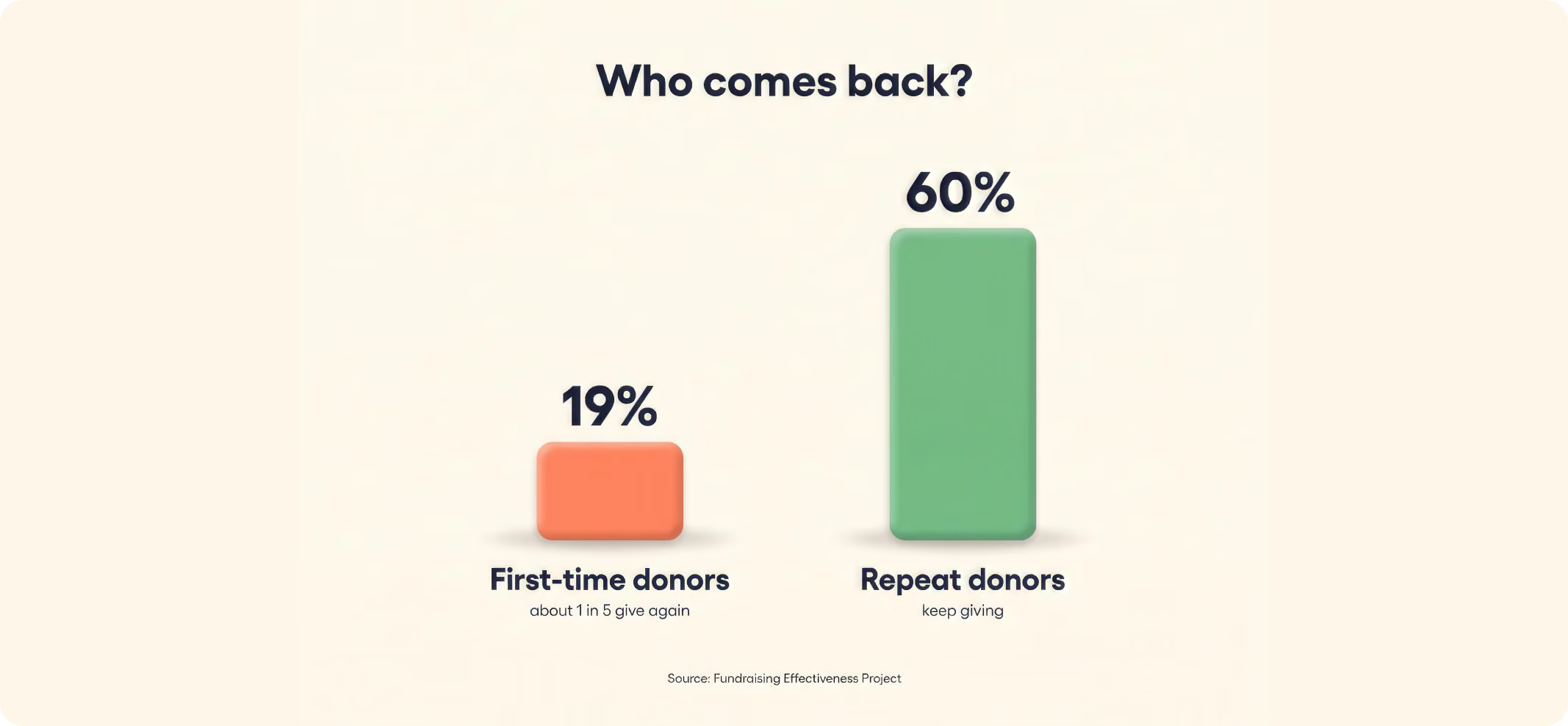
Across the sector, the Fundraising Effectiveness Project found that overall donor retention sits at just 43%. Dig into that number, and it splits in a way every campaign organizer should write on their whiteboard: only about 19% of brand-new donors give again the next year, compared to nearly 60% of repeat donors.
That gap is exactly why a follow-up plan matters so much: it's the single highest-leverage moment in your entire donor lifecycle. Close even part of that gap and you've changed your campaign's math, permanently.
It's not that your new donors don't care. Most of them gave for a very human reason: a friend asked, the event was fun, the cause hit home in the moment. They gave to a moment, not yet to a mission. That spark just never had a chance to turn into something more. The follow-up that would have carried it forward usually isn't part of the plan yet.
That's not a failure of generosity. It's a gap in follow-through, and it's completely fixable.
What Makes the Second Gift So Important?
The second gift is the moment a "donation" becomes a "donor."
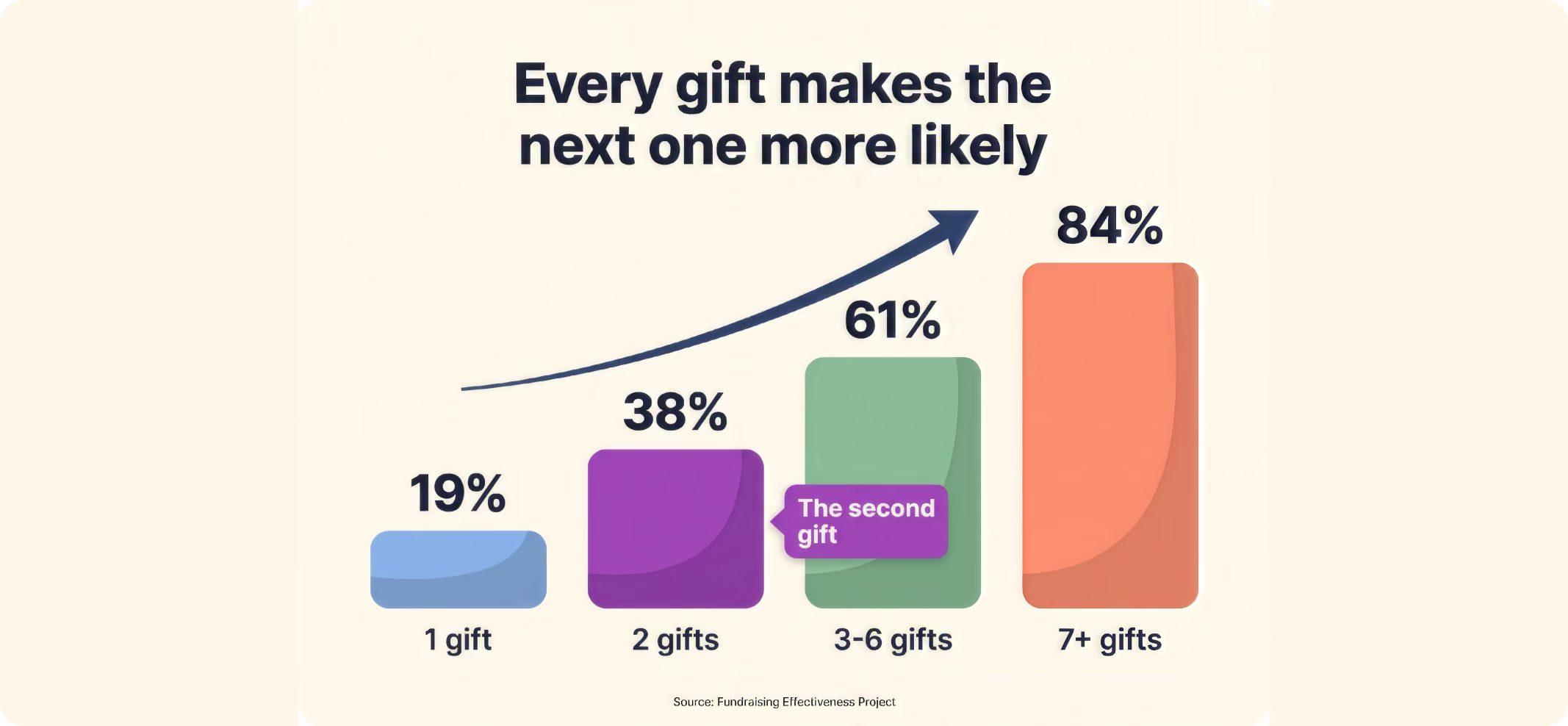
When you look at retention by how many times someone has given, the pattern is striking. According to the Fundraising Effectiveness Project, a donor who has given just once is retained at under 20%. Donors who give a second time are retained at roughly double that rate. By the time someone has given a handful of gifts, retention climbs past 60%, and your most loyal supporters stick around at over 80%.
Each additional gift is associated with a higher chance of the next one. The second gift is simply the first, and hardest, step up that ladder. It's where a one-time giver decides you were worth it.
There's a hard-nosed financial reason to care, too. Acquiring a brand-new donor is expensive. Fundraising researcher Adrian Sargeant found that it typically costs two to three times as much to recruit a donor as that donor gives in their first gift, and it can take 12 to 18 months before the relationship actually pays off.
In other words, your campaign's return doesn’t show up in the first gift. It shows up in the second. You've already covered the hard, expensive part of donor acquisition. What's left is capturing the return you've already paid for.
When Should You Ask an Event Donor for Their Second Gift?
Within about 90 days, but only after you've said thank-you and shown their impact first. Ask too soon and it feels transactional. Go silent for months and they might forget about you.
The instinct after a big campaign is to give everyone a long rest before asking again. The problem is that "resting" a brand-new donor usually means going silent, and silence is how first-time donors move on. The window to build a real relationship is widest right after they give, while your mission is still fresh in their mind.
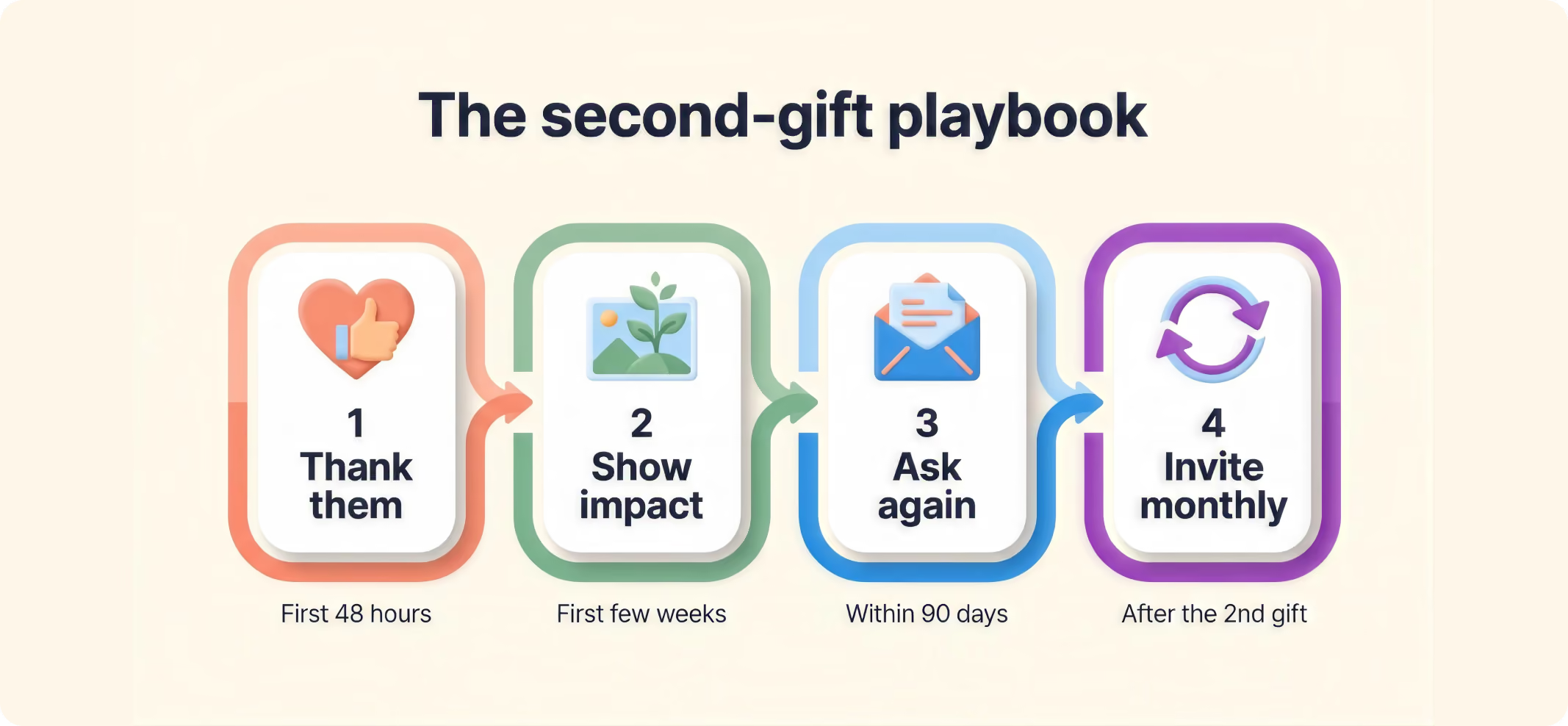
So the timing isn't "ask again immediately" or "wait six months and hope." It's a short, intentional sequence over the first few months:
- The first 48 hours: a genuine thank-you. No ask.
- The first few weeks: proof that their gift mattered. Still no ask.
- Within about 90 days: a specific, easy invitation to give again or step up to monthly.
Think of it as earning the right to ask. By the time the second ask arrives, they've already heard "thank you" and "here's what you did," so "here's how you can do it again" feels like an invitation, not a demand.
How Do You Turn a First-Time Event Donor Into a Repeat Giver?
Here's the part you can put to work this week. Winning the second gift comes down to five moves.
1. Capture the relationship, not just the transaction
Pledge It is built to run a brilliant campaign and collect the gift. Nurturing that donor over the next five years is a different job, and it calls for a different tool. The names, emails, and giving details from your event are gold, and they're most powerful when they flow out of your campaign and into a system built for long-term relationships.
That home is a donor management system, where every gift, note, and email lives on one timeline. A donor CRM like DonorDock is built for exactly this, and DonorDock and Pledge It are working together to make that connection easier. The tool matters less than the principle: if you can't see who gave once, you can't invite them to give twice.
2. Thank them fast, and make it personal
Before you ever ask for anything again, say thank you like you mean it. Fast, specific, and human beats slow, generic, and automated every time.
An automated receipt is a receipt, not a thank-you. Add a real one on top: a short email that names the campaign they supported, a quick note from a staff member, or a phone call from a board member for your bigger first-time gifts. Prompt, personal gratitude is one of the most reliable retention tools in fundraising, and it costs almost nothing.
3. Show impact before you ask for anything
Between the thank-you and the second ask, send one message that has no ask at all. Just proof.
Show them the meal served, the tree planted, the kid who made the team, the shelter that stayed open another month. First-time donors gave on faith. A quick "here's what your gift did" turns that leap of faith into trust, and trust is what makes a second gift feel obvious.
4. Make the second ask specific and timely
When you do ask again, don't send the same generic appeal your whole list gets. Reference what they already did. "You helped us hit our goal at the spring ride. Here's the next thing we're trying to pull off, and we'd love you with us again."
This is where having your donors organized pays off. When your first-time event donors are tagged as their own segment, you can speak to them as the specific people they are, at the specific moment they're most likely to say yes. Reminders and automated nudges can flag when it's time to follow up so no one slips through the cracks while you're heads-down on the next campaign.
5. Invite your best repeat donors to go monthly
Once someone gives that second gift, you've earned the right to offer them the best relationship you have: recurring giving.
It's worth it for both of you. Monthly donors are retained far more reliably than one-time givers, roughly 71% a year later versus about half of one-time online donors, according to M+R's benchmarks. Recurring giving is also one of the fastest-growing parts of nonprofit revenue, now around 27% of all online giving. A repeat donor who loves your work is your single best candidate to become a monthly sustainer. All you have to do is ask.
The Bottom Line
Your next great donor is almost certainly someone who already gave to you once. They showed up. They believed in the moment. Now the job is to turn that moment into a relationship.
You don't need a bigger campaign to grow. You need a plan for the 90 days after the one you just ran. Thank your first-time donors like they matter, show them the good they did, and give them one clear reason to do it again. Win the second gift, and you've done more than raise a little more money. You've started building the kind of loyal, giving community that carries your mission for years.
The event ends. The relationship is just getting started.
Frequently Asked Questions
What is a good donor retention rate?
Across the sector, overall donor retention hovers around 43%, according to the Fundraising Effectiveness Project. But the number that matters most after a campaign is the split: only about 19% of first-time donors give again, versus nearly 60% of repeat donors. If your first-time retention is climbing toward that repeat-donor range, you're doing something right.
How soon should you thank a donor after an event?
As fast as you can, ideally within the first 48 hours, and before you ask for anything else. A prompt, personal thank-you, whether an email, a handwritten note, or a quick call for larger gifts, is one of the most reliable ways to earn a second gift. Save the next ask for later.
How do you turn a one-time donor into a monthly donor?
Win the second gift first, then invite your most engaged repeat donors into recurring giving. Monthly donors are far stickier, with about 71% still giving a year later, per M+R's benchmarks. A repeat donor who already loves your work is your best candidate to become a monthly sustainer, so make the invitation specific and easy to say yes to.
About the Author
This guest post was written by the team at DonorDock, the donor management platform built for growing nonprofits that want their fundraising in one place. DonorDock picks up where your Pledge It campaign leaves off, helping lean teams thank, track, and steward the donors they work so hard to bring in, so more first-time givers become lifelong supporters. Learn more about turning one-time givers into lasting donors.